
|
Getting your Trinity Audio player ready...
|
Last Revised: 12/31/25
Expansion tanks are one of those plumbing components most homeowners don’t think about until something goes wrong. Understanding what they do can save you from costly repairs down the line.
Here’s the straightforward answer: an expansion tank is a small safety device installed near your water heater that absorbs excess pressure created when water heats up and expands. It’s like a shock absorber for your plumbing system. Without it, the increased pressure from your heated water has nowhere to go, which can damage your water heater, stress your pipes, and lead to costly repairs.
Here at Mattioni, we’ve been helping homeowners find clarity in confusing plumbing situations since 1948. We’re here to help guide you to confident decisions about the future of your home’s comfort and safety.
Let’s walk through what you need to know about expansion tanks, why your home might need one, and how to tell if yours is working properly.
What Does an Expansion Tank Do?
When water heats up inside your water heater, the water expands in volume. This is a basic property of how water behaves when heated, called thermal expansion. In fact, water can expand by about two to three percent as it heats up.
In a 50-gallon water heater, that expansion creates several gallons of extra water volume. In older homes with “open” plumbing systems, this expanding water could simply push back out into the municipal water supply. But most homes today have “closed” plumbing systems, which means once water enters your home’s pipes, it can’t flow back out into the city water lines.
This is where an expansion tank becomes essential. Without anywhere for the expanding water to go, pressure builds up throughout your plumbing system. The expansion tank gives that extra water a safe place to go, preventing dangerous pressure spikes that can damage your water heater, weaken pipe joints, and even cause your temperature and pressure relief valve to fail prematurely.
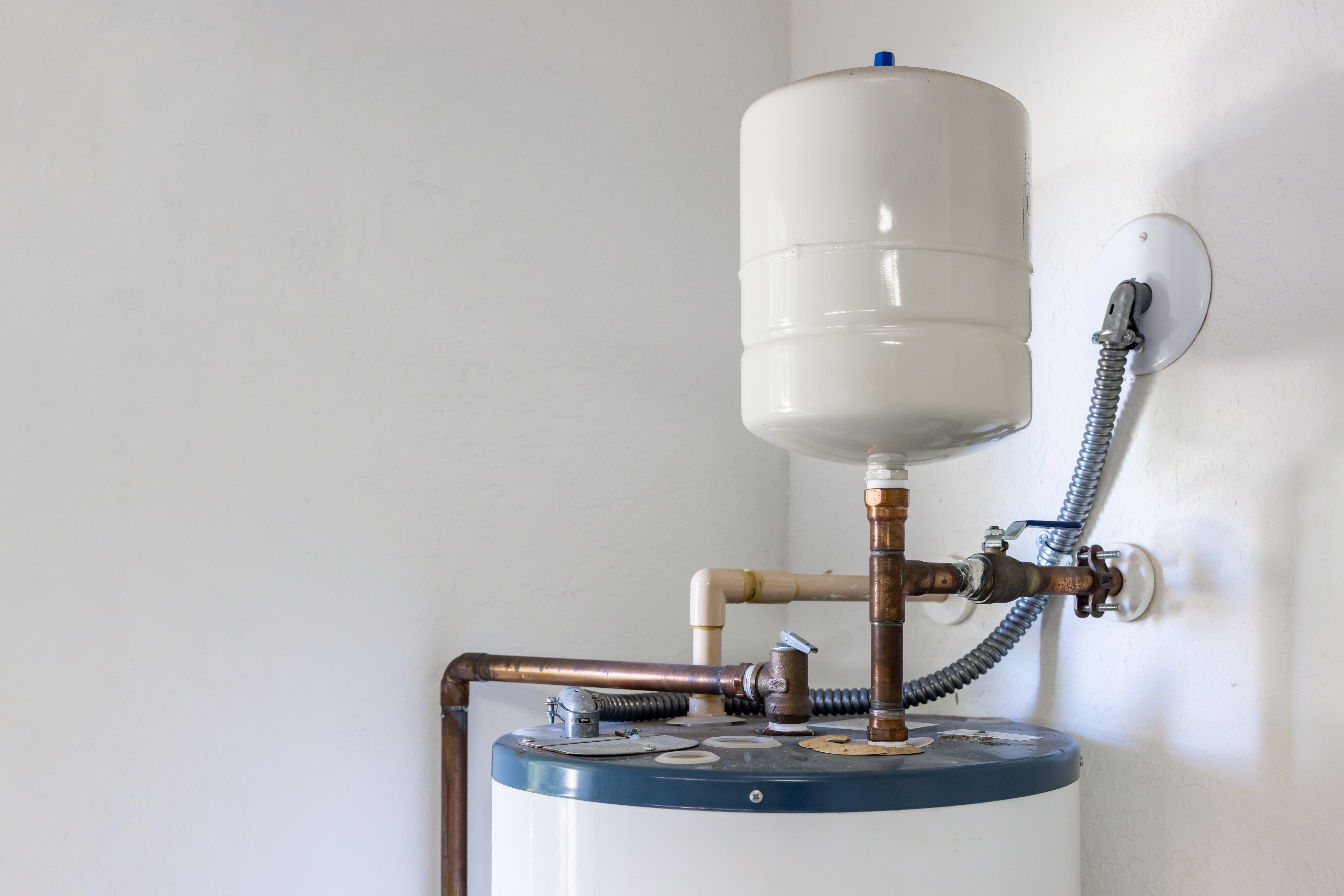
Inside the expansion tank, there’s a rubber bladder or diaphragm mechanism that separates water from air. When heated water expands, it flows into the tank and compresses the air cushion inside. As the water cools down or you use hot water, the compressed air pushes the water back out, maintaining stable pressure throughout your system. It’s a simple but effective solution that protects your entire plumbing system from the stress of thermal expansion.
How Do You Know If You Need an Expansion Tank?
The short answer is: if your home has a closed plumbing system, you need an expansion tank. And chances are, if your home was built or your plumbing was updated in the past 15 to 20 years, you have a closed system.
If you’re not sure whether your home has a closed system, look for a backflow prevention valve alongside your main water shutoff valve (usually in the basement).
You can also tell you need an expansion tank if you experience any of the following:
- Banging or knocking sounds in your pipes when you turn on hot water
- Dropping water temperatures
- Leaks around your water heater
- Unusually high water pressure
Many plumbing codes now require expansion tanks to be installed whenever a new water heater is put in, and some water heater manufacturers may even void their warranties if you have a closed system without an expansion tank. It’s become a standard safety feature for good reason.
What Size Expansion Tank Does Your Home Need?
Expansion tanks come in different sizes, typically ranging from two to five gallons. The size you’ll need depends on a few factors: your water heater’s tank size, your home’s water pressure, and the temperature setting on your water heater.
For most homes with a standard 40 to 50-gallon water heater, a two-gallon expansion tank is usually sufficient. If you have a larger water heater (over 60 gallons), you’ll likely need a larger expansion tank, often around 4 gallons. Homes with water heaters over 80 gallons typically need a five-gallon tank.
Water pressure also plays a role in sizing your expansion tank. Homes with higher incoming water pressure create more expansion, which requires a larger tank to handle the increased volume safely. If you have particularly high water pressure, your plumber might suggest installing a pressure reducing valve first to bring your baseline pressure down to a safer level.
The good news is that expansion tanks come with sizing charts from the manufacturer, and the team of experienced plumbers at Mattioni know exactly which size will work best for your specific situation. When in doubt, it’s often better to go slightly larger rather than smaller – a bigger tank won’t hurt anything, but an undersized tank won’t provide adequate protection.
How Long Do Expansion Tanks Last?
On average, you can expect an expansion tank to last between five and ten years with proper maintenance. Some tanks last longer if they’re well-maintained and your water quality is good, while others might fail sooner if they’re improperly sized or if your water is particularly hard or corrosive.
The rubber bladder inside the tank is the part most likely to fail over time. As it ages, the bladder can develop small tears or lose its flexibility, which means the tank loses its ability to absorb pressure.
If you notice water leaking from the tank itself or from the connection point, that’s a clear indication that something’s wrong. A tank that feels unusually heavy when you tap on it might be waterlogged, meaning the bladder has failed.
You can also press on the air valve at the top of the tank. If water comes out instead of air, the bladder has failed, and the expansion tank needs to be replaced.
Annual inspections by a qualified plumber can catch these issues early. During a water heater maintenance visit, your plumber can check the air pressure in the expansion tank, look for signs of corrosion or leaks, and verify the tank is properly supported and positioned.
Where Should an Expansion Tank Be Installed?
Expansion tanks are typically installed on the cold-water supply line leading to your water heater. You’ll usually find them mounted near the top of the water heater, though they can technically be placed anywhere on the cold-water line as long as there are no valves between the tank and the water heater.
Most expansion tanks should be installed vertically with the air valve at the top and the connection at the bottom. Some manufacturers now specify this vertical mounting in their installation requirements. This orientation helps ensure the rubber diaphragm inside functions correctly and helps prevent premature wear.
The tank also needs proper support – it should never hang solely from the piping. The tank should also be positioned at least 18 inches away from the water heater’s vent connector to avoid exposure to hot exhaust gases.
The exact placement depends on your specific plumbing configuration and space, but an experienced plumber will know the best location for proper function and easy future access for maintenance or replacement.
Protecting Your Home’s Plumbing Investment
Your home’s plumbing system is designed to work together as a complete unit, and every component plays a role in keeping everything running safely and efficiently. An expansion tank might be small, but its job is crucial to protecting your water heater, pipes, and fixtures from the damaging effects of thermal expansion.
Installing an expansion tank can save you thousands by avoiding premature water heater replacement, pipe repairs, and potential water damage down the road. It’s one of those smart preventative measures that pays for itself by avoiding much bigger problems.
Ready to Protect Your Home’s Plumbing?
Don’t wait for an emergency to start thinking about your plumbing system’s health. Mattioni has been keeping homes running smoothly since 1948, earning our 5-star reputation by treating every home like our own. We’ll give you straight answers about what your home needs.
Schedule a water heater inspection today and let our team check your expansion tank, assess your water pressure, and ensure your entire system is protected. We’ll help you understand exactly what’s going on with your plumbing and recommend solutions that make sense for your home and budget.
Call Mattioni at (610) 400-8510 or book your appointment directly online. We’re here to help you avoid surprises and keep your home comfortable and safe.