
Quick answers: PEX piping
What is PEX piping?
PEX (cross-linked polyethylene) is a flexible plastic tubing used for residential water supply lines. It bends around corners, resists freezing better than rigid pipe, installs faster than copper, and has become one of the most common plumbing materials in newer and repiped homes across Southeastern Pennsylvania.
Is PEX piping safe for drinking water?
Yes. PEX certified to NSF/ANSI 61 is approved for potable (drinking) water and is allowed under most modern plumbing codes. Use a fresh run, flush new lines before use, and choose certified tubing for the best results.
How long does PEX piping last?
A properly installed PEX system typically lasts 40 to 50 years. Keeping PEX out of direct sunlight and protecting it from very high temperatures helps it reach the upper end of that range.
Is PEX better than copper?
It depends on your home. PEX is cheaper, faster to install, and resists freeze-bursting and corrosion. Copper lasts longer outdoors, tolerates higher heat, and is fully recyclable. For most interior residential water lines, PEX is the more cost-effective choice.
Can PEX be used for hot water?
Yes. PEX handles both hot and cold supply lines, which is why it is color-coded red for hot and blue for cold. It is rated to roughly 200°F, well above normal household hot-water temperatures.
Last Revised: 6/3/2026
If you’ve ever taken a peek behind the walls of a basement in a newer home, then you’ve probably seen that flexible red and blue tubing, instead of the rigid copper pipe of yesteryear.
That modern plumbing is almost always something called PEX, and over the last two decades, it has quietly become one of the most common plumbing materials in homes across the world.
If you are weighing a repiping investment, planning a renovation, or are simply curious what is running through your walls, this article will give you exactly what you need to know about PEX piping.
What is PEX Piping?
PEX stands for cross-linked polyethylene. In plain terms, it’s a strong, flexible plastic tubing engineered specifically to carry your home’s water supply. The “cross-linked” part refers to a manufacturing process that bonds the plastic at a molecular level. That process is what gives PEX its durability and its ability to handle both heat and pressure without becoming brittle.
You’ll usually see it color-coded: red tubing for hot water lines, and blue for cold. White or gray tubing may be used for either. That simple color system makes a plumbing system far easier to read and service by you and your plumber.
Because PEX arrives in long, bendable rolls rather than rigid sticks, a plumber can often run a single continuous line from your water source to a fixture with far fewer joints and fittings than a copper system would need.
How Does PEX Piping Work in Your Home?
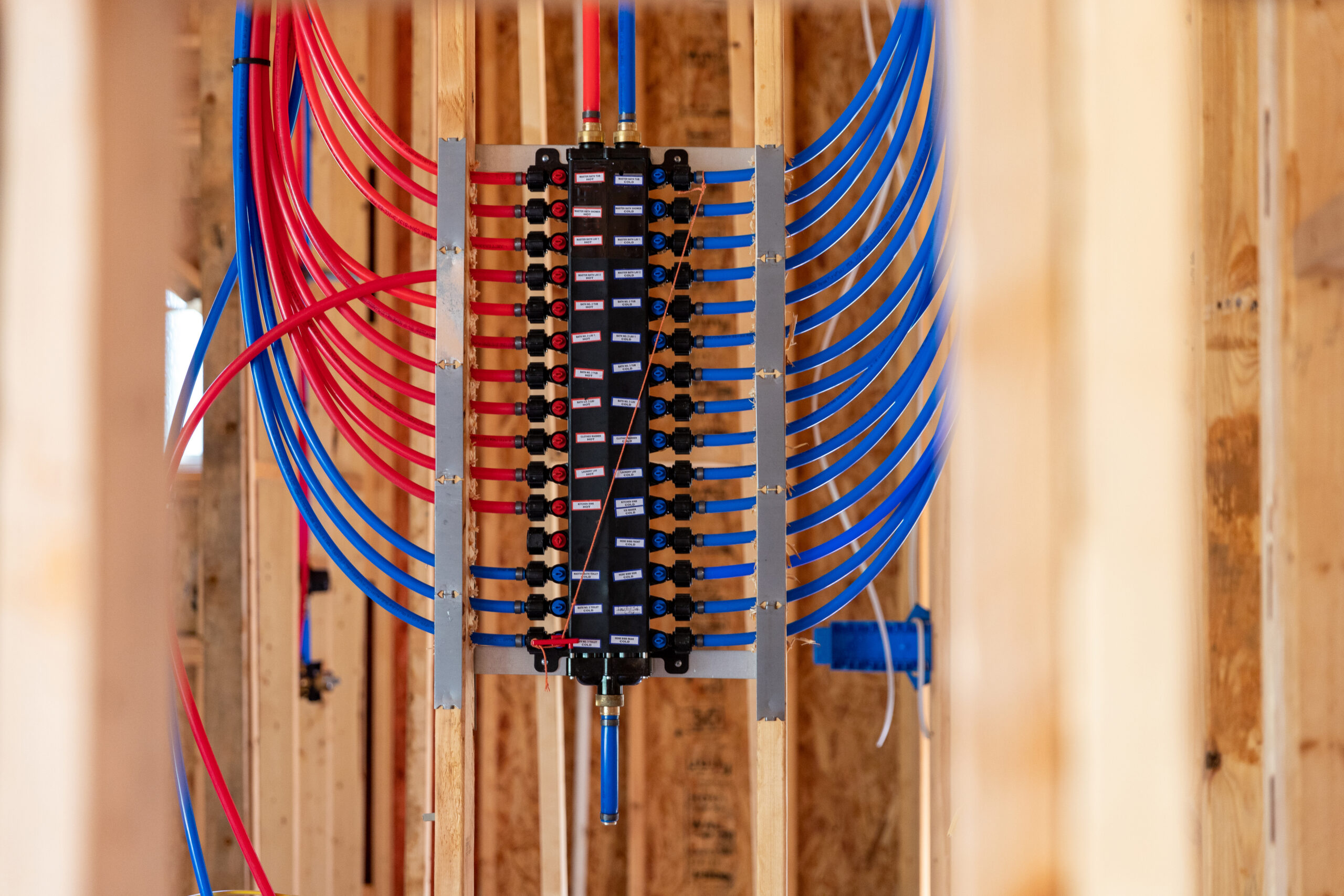
Most modern PEX installations use what’s called a “home-run” or manifold system. It’s basically a central hub. Think of it like a breaker panel, but for your water.
Individual PEX lines run from that manifold directly to each fixture: one to the kitchen sink, one to each bathroom, one to the washing machine, and so on.
Since each fixture has its own dedicated line, you receive more consistent water pressure at each different tap, plus the ability to shut off water to one fixture without affecting the rest of your house.
What Are PEX-A, PEX-B, and PEX-C?
You may also hear about three main types of PEX: PEX-A, PEX-B, and PEX-C. The letters refer to how the tubing is manufactured, not to a quality grade.
PEX-A is the most flexible and forgiving to freezing. PEX-B is the most widely used and budget-friendly. PEX-C sits in between. For most homes, the difference matters far less than having the system installed correctly by a licensed professional.
PEX vs. Copper vs. CPVC: An Honest Plumbing Comparison
No single pipe material is right for every situation, and any plumber who tells you otherwise is overselling. Here’s a straight comparison so you can make an informed decision.
PEX
PEX is inexpensive, fast to install, and naturally resistant to the corrosion and mineral scale that plague metal pipes. Its flexibility also means it’s far less likely to burst when water freezes inside it. During a PA cold snap, that’s a real advantage. The trade-offs with PEX are that it can’t be used outdoors in direct sunlight (which is rarely needed anyways), it can’t be installed close to high-heat sources, and it can’t be recycled as copper can.
Copper
Copper is the time-tested standard. It tolerates very high temperatures, performs well outdoors, and is fully recyclable. It can also last well over 50 years. The downsides to copper are cost and labor. It’s significantly more expensive, takes longer to install because each joint must be soldered, and can corrode or develop pinhole leaks in areas with aggressive water chemistry.
CPVC
CPVC is a rigid plastic that costs less than copper and handles hot water. However, it becomes brittle with age, can crack in freezing conditions, and requires solvent cement at every joint. For most interior residential supply lines today, PEX has largely replaced CPVC.
Is PEX Safe for Drinking Water?
This is one of the most common questions homeowners ask, and the short answer is yes. It’s been approved for potable water and is accepted under most current plumbing codes. As with any new plumbing, it’s good practice to flush the lines before regular use.
If you’re ever unsure whether your existing tubing is certified, a licensed plumber can confirm it during a routine inspection.
How Long Does PEX Piping Last?
A properly installed PEX system generally lasts 40 to 50 years. Two things help it reach the top of that range: keeping it shielded from direct sunlight (UV exposure degrades the plastic over time), and routing it away from sources of extreme heat.
The good news for homeowners here in Chester, Delaware and Montgomery counties is that PEX’s freeze resistance makes it well-suited to our winters, where a sudden freeze can split a more rigid pipe.
Should You Repipe Your Home With PEX?
If your home still has aging galvanized steel pipes, you are dealing with recurring leaks, or your water pressure has been quietly declining for years, a PEX repipe is often the most cost-effective long-term fix.
Galvanized pipe corrodes from the inside out, narrowing over time and dragging down your water pressure – something that can’t be reversed. Replacing it with PEX restores flow and buys you decades of reliable service.
It’s also worth understanding the wider plumbing picture in your home. Hard water, for example, accelerates wear on every pipe and appliance you own, which is why many homeowners pair a repipe with a closer look at their water quality.
Our guide on whether you need a water softener is a helpful starting point. If your concerns started with your hot water specifically, you may also want to read about why a water heater leaks and the differences between indirect and direct tank water heaters before you invest.
Getting PEX Right Starts With the Right Plumber
PEX is an excellent material, but like any plumbing, it’s only as good as the installation behind it. The wrong fittings or a line routed too close to a heat source can undo all its advantages. That’s exactly the kind of thing that 75+ years of local experience is built to get right.
Here is how to move forward with confidence:
- First, identify the problem. Aging pipes, low pressure, recurring leaks, etc.
- Then, call Mattioni. Reach out to our friendly team at (610) 400-8510 or book your appointment online. We’ll inspect your system and walk you through clear, upfront, flat-rate options.
- Get it done right the first time. Our licensed technicians install PEX properly the first time, so you can stop worrying about your pipes and get back to enjoying your home.
Reliable water shouldn’t be something you spend any amount of time thinking about. With Mattioni, we keep it simple, straightforward, and built to last. So you can turn on the tap without a second thought.