
Quick answer: Pet-proofing your plumbing
How do I pet-proof my home’s plumbing?
Keep toilet lids closed, use drain stoppers to catch shedding fur, never flush cat litter, cover exposed pipes, keep dogs from digging near buried lines, and know where your water heater, sump pump, and main shutoff valve are. Mattioni has helped pet-owning homeowners across Chester County and the Greater Philadelphia area protect both their plumbing and their pets for over 75 years.
Can I flush cat litter down the toilet?
No. Cat litter can expand to more than 10 times its original volume when it absorbs moisture, which clogs pipes fast, and waste in litter can carry parasites like Toxoplasma gondii into the water supply. Even litter marketed as “flushable” isn’t a guarantee — scoop it into the trash instead.
Last Revised: 8/14/26
How empty would life be without our four-legged family members? Our pets enrich our day-to-day lives in so many ways with their unconditional love. With all the wonderful things our pets do for us, it’s our responsibility to keep them safe, happy, and healthy.
However, even the most devoted pet-owners can overlook some extra measures that should be taken to ensure their pets’ safety at home. Furthermore, many of these measures also keep our plumbing in good working order. To help you ensure the health of your home and your furry friends, the Mattioni team is here to share 8 tips to make your plumbing pet-proof.
1. Keep Toilet Lids Closed
Pets often turn to the toilet bowl when their own water bowl has run dry, so keep fresh water refilled and easy to reach, especially if you’re out for the day. Chemicals in toilet bowl cleaners can linger in the water for weeks, and ingesting them can make your furry friend sick. We’re not here to tell you how to parent your pet, but if you think it’s a habit worth breaking, this is one small action that ends it.
2. Don’t Flush Cat Litter
Cat litter can expand to more than 10 times its original volume once it absorbs moisture, and that swelling is exactly what can cause a clogged pipe from just one flush. Not to mention it’s also a health risk beyond the clog: waste in litter can carry parasites. Here’s the one thing worth knowing: even litter marked as “flushable” isn’t flushable. Any type of cat litter can cause problems in an older home’s plumbing or septic system. The safest approach is simple: scoop it into the trash, every time, regardless of what the bag says.
3. Use Drain Stoppers
Another important tip for pet owners who choose to bathe their dog or cat at home is to use drain stoppers. Especially if your pets are prone to shedding, it’s imperative to catch their fur in a drain stopper during baths to keep it from clogging your pipes.
4. Don’t Let Your Dog Dig
A determined digger can do more than tear up your yard; they can hit a water or sewer line. This not only potentially puts your dog in harm’s way, but it can also damage the line. Before your dog develops a favorite digging spot, call 811 to have utility lines marked. It’s a free service, and it’s the same first step our technicians take before any outdoor plumbing work. Knowing where your lines run makes it a lot easier to redirect a determined digger somewhere safer.
5. Keep Cleaning Products in Out-of-Reach Places
Anyone with kids has faced or is currently facing the challenge of toddler-proofing your home. As one of the most important parts in childproofing, you must find safe, out-of-reach places for all cleaning products.
Well, the same rule applies when it comes to pet-proofing your home. To keep curious cats and mischievous mutts from getting into toxic chemicals, keep cleaning products in a place where they cannot reach them.
6. Cover Exposed Pipes
A damaged pipe from chewing can mean an unexpected repair bill and, depending on what got exposed, a trip to the vet. Both of which cost far more than prevention. Foam pipe insulation sleeves are an inexpensive way to cover exposed pipes in basements, crawl spaces, and under sinks, and they double as a chew deterrent. Keep cabinet doors under sinks closed, and pay attention during a puppy’s teething phase. It’s easy to underestimate how quickly a curious puppy can do damage.
7. Secure the Area Around Your Water Heater and Sump Pump
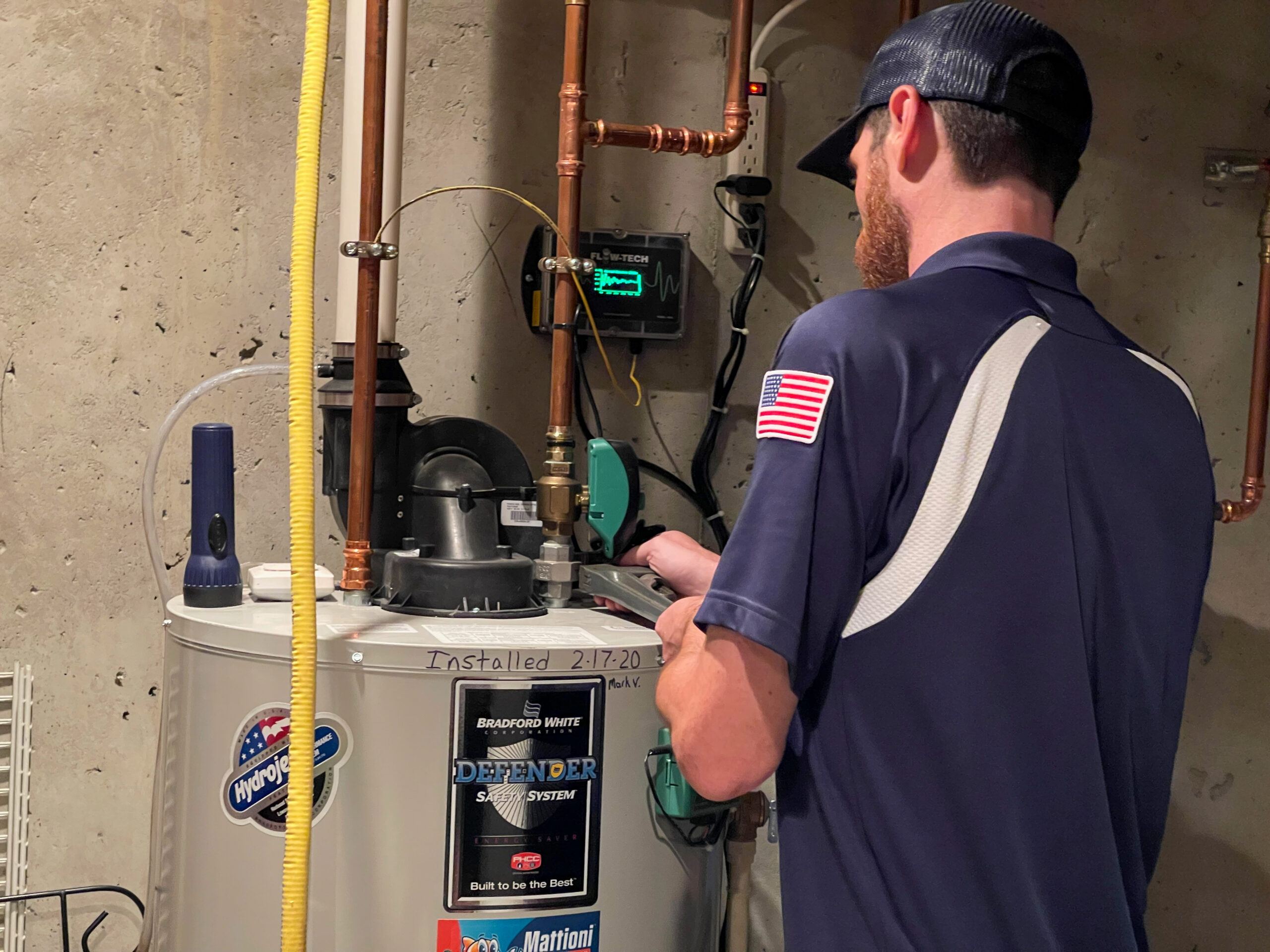
Water heater closets and sump pump pits aren’t places you think to pet-proof, but both carry real risk. A curious cat or small dog can get into a water heater closet and knock loose an access panel or wiring, and an open sump pump pit is a genuine drowning hazard for a small pet who falls in. If your sump pump area isn’t already covered, a secure lid is a simple, inexpensive fix that’s worth asking your plumber to check during your next routine visit.
8. Know Where Your Main Water Shutoff Valve Is
Hopefully you’ll never need this one, but if your pet ever knocks a supply line loose or damages a hose, knowing how to shut off your home’s water supply fast is the difference between a quick fix and a flooded floor. Most homes in the Greater Philadelphia area have the main shutoff near the water meter, in a basement, or near a front-facing exterior wall. Taking five minutes now to find and mark yours can save precious seconds during a leak.
Frequently Asked Questions
Why shouldn’t I let my pet drink from the toilet?
Toilet bowl cleaner chemicals can linger in the water for weeks and make pets sick if ingested. Keep the lid down and refill your pet’s regular water bowl often so they’re not tempted.
Why do I need a drain stopper if I have pets?
Shedding fur washes down the drain during baths and builds up into clogs over time. A simple drain stopper catches it before it becomes a plumbing problem.
How can I keep my dog from damaging my water or sewer lines?
Discourage digging near known utility lines, and before your dog develops a favorite digging spot, call 811 to have Pennsylvania utility lines marked — it’s free, and it’s the same first step our technicians take before outdoor plumbing work. Digging into a buried line can damage your plumbing and injure your dog.
How do I protect exposed pipes from pets?
Cover exposed pipes with foam pipe insulation sleeves, which double as a chew deterrent, and keep under-sink cabinets closed. Pay extra attention during a puppy’s teething phase, when chewing behavior peaks and damage can happen fast.
Can pets get hurt near my water heater or sump pump?
Yes. A curious cat or small dog can get into a water heater closet and knock loose an access panel, and an open sump pump pit is a real drowning hazard for a small pet. A secure sump pump lid is an inexpensive fix, and it’s worth asking your plumber or HVAC technician to check during your next routine visit.
Why should I know where my main water shutoff valve is?
If your pet ever knocks a supply line loose or damages a hose, knowing how to shut off your home’s water supply quickly limits the damage. Most Greater Philadelphia-area homes have the main shutoff near the water meter, in a basement, or near an exterior wall — take five minutes to find yours.
Let Mattioni Do the Rest
Now that you have some tips to make your plumbing pet-proof in your arsenal, you’re one step closer toward making your home a safer place. If you are looking for a professional touch in your next plumbing project, the team at Mattioni is ready to lend a hand! To find the best solutions for your home plumbing, call us today at (610) 400-8510 or fill out a service request form on our website!