
Mattioni Plumbing, Heating & Cooling · Serving Greater Philadelphia Since 1948
How Do Heat Pumps Work? The Refrigeration Cycle, Explained for Homeowners
The mechanics behind the system that heats and cools your home from a single unit — and why it uses a fraction of the energy a furnace does.
If you've been shopping for a new HVAC system, you've probably come across the term "heat pump" more than once, and maybe walked away a little confused. Does it only heat? Does it work in Pennsylvania winters? How is it actually different from a furnace or air conditioner?
This article answers the foundational question: how does a heat pump physically work? Once you understand the mechanics, everything else (the equipment options, the costs, whether it's right for your home) will make a lot more sense.
TL;DR
A heat pump moves heat from one place to another using a refrigerant cycle. It doesn't burn fuel to create heat. In summer it pulls heat out of your home, and in winter it extracts heat from outdoor air and brings it inside. Because it transfers heat instead of generating it, a heat pump delivers 2–4 units of heating or cooling for every 1 unit of electricity it uses. Mattioni has been installing HVAC systems across Chester, Delaware, and Montgomery counties for over 75 years.
01 The Core Principle: Heat Is Moved, Not Made
Here's the main insight that makes heat pumps stand out from traditional heating equipment: a heat pump doesn't create heat, it moves it. This is the fundamental difference between a heat pump and a furnace. A furnace burns fuel to generate heat inside your home. A heat pump instead extracts heat from ambient outdoor air and transfers it indoors, which takes far less energy than making it from scratch.
Think about your refrigerator. It doesn't actually produce cold air. It pulls heat out of the interior compartment and pushes it out through the coils at the back. Your food stays cold because the heat has been removed. A heat pump works on exactly the same principle, just applied to your entire home.
In cooling mode (summer), the heat pump extracts heat from your indoor air and releases it outside. Your home gets cooler because the heat has been removed from it. In cooling mode, a heat pump is no different from central AC.
In heating mode (winter), the process reverses. The heat pump extracts thermal energy from outdoor air and transfers it inside. Even at frigid temperatures, there's still significant heat energy in the air that the refrigerant is designed to capture and concentrate. This heating functionality is significantly more efficient than burning fuel.
A reversing valve is the component that makes this direction switch possible, and it's what separates a heat pump from traditional HVAC systems.
02 The Four Components That Make It Happen
The refrigeration cycle inside a heat pump runs through four main parts in a continuous loop. Each one plays a specific role in moving heat from where it is to where you want it.
01 — Evaporator Coil
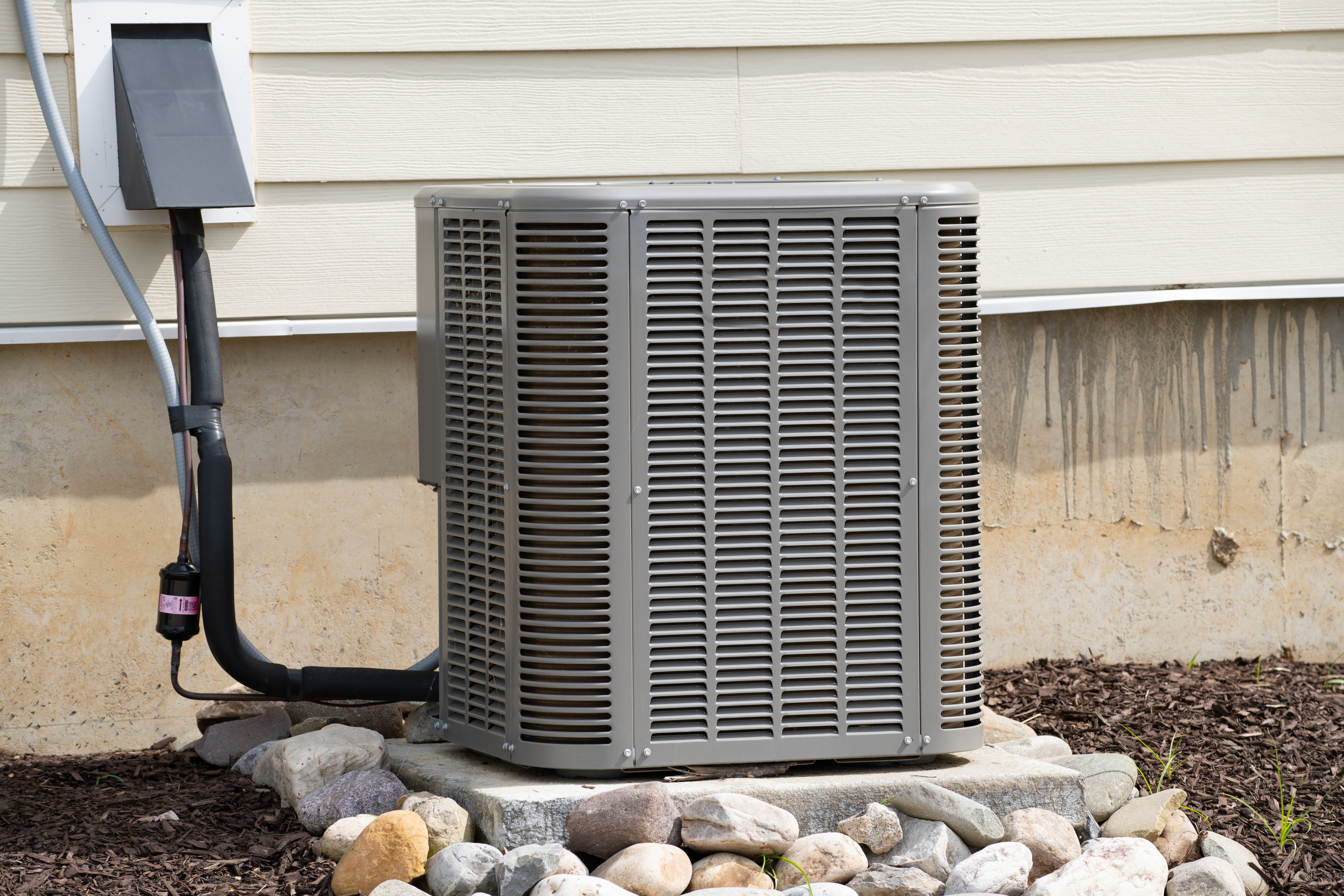
This is where the refrigerant absorbs heat from the surrounding air. In heating mode, the evaporator is in the outdoor unit, pulling heat from outside air into the refrigerant. In cooling mode, it's in the indoor unit, pulling heat from your indoor air to cool your home.
02 — Compressor
Once the refrigerant has absorbed heat and turned into a low-pressure gas, the compressor pressurizes it. This dramatically raises the refrigerant's temperature, concentrating the heat so it can be transferred effectively to its destination. The compressor is the heart of the system and the primary reason heat pumps use electricity rather than fuel.
03 — Condenser Coil
The high-pressure, high-temperature refrigerant releases its heat here. In heating mode, this is the indoor coil, dumping heat into your home's air supply. In cooling mode, it's the outdoor coil, releasing heat outside where it belongs.
04 — Expansion Valve
After releasing its heat, the refrigerant passes through the expansion valve, which drops its pressure and temperature back down so it can begin absorbing heat all over again. This completes the cycle and the loop starts over, continuously, until your home hits the thermostat target.
The refrigerant doesn't get used up in this process. It simply changes state (liquid to gas and back) as it moves through the four stages, carrying heat along with it every time.
Important
The reversing valve is what allows the same system to switch directions between heating and cooling. Without it, a heat pump would just be a standard air conditioner.
03 Why Heat Pumps Are More Efficient Than Furnaces
When a gas furnace burns fuel to create heat, some energy is always lost in combustion. Even the best high-efficiency furnaces convert about 95–98% of their fuel into usable heat, and the remaining 2–5% escapes as exhaust gases through the flue.
A heat pump doesn't burn anything. It uses electricity only to run the compressor and circulate refrigerant. That means for every unit of electrical energy consumed, it can deliver 2–4 units of heating energy, a ratio called the Coefficient of Performance (COP). In practical terms, that's 200–400% efficiency. No combustion-based system can achieve this, because creating energy always loses some in the process.
The math matters for your energy bill. Homeowners in Chester, Delaware, Montgomery, and Berks counties currently heating with oil or propane typically see meaningful monthly savings after switching to a heat pump. Oil and propane are expensive and price-volatile. Electricity is more stable and a heat pump uses it far more efficiently than any resistance-based electric heat.
04 Do Heat Pumps Work in Pennsylvania Winters?
Yes, with the right system. This is the most common question we hear across Chester, Delaware, Montgomery, and Berks counties, and it deserves a direct, honest answer.
Older heat pump models did struggle in extreme cold, losing meaningful efficiency below 30–35°F. If that's the version of heat pumps someone you know had installed a decade ago, their skepticism is understandable. But this has been focus of the industry for many years, and the technology has improved.
Modern cold-climate heat pumps are engineered to extract heat from outdoor air at temperatures as low as -15°F to -31°F. Brands like Amana and York have invested heavily in low-temperature performance, and the results are measurably different from what was available even five years ago.
For homes that experience prolonged single-digit stretches (which Pennsylvania winters occasionally deliver) a dual fuel hybrid system pairs the heat pump with a gas or propane furnace as a backup. The heat pump handles the vast majority of your heating and all of your cooling. The furnace only kicks in on the coldest nights when the heat pump's efficiency starts to drop below a set threshold. This combination gives you the efficiency of a heat pump without giving up the raw heating power of a furnace on the coldest January days.
05 What This Means for Your Home — and Your Next Step
Understanding how the refrigeration cycle works is the foundation, but it's only the start of the heat pump conversation. The practical questions homeowners actually face each have their own detailed answers. Rather than repeat that ground here, we've covered each one in its own dedicated article:
The Homeowner's Guide to Buying a Heat Pump: single-stage vs. two-stage vs. variable-speed, what to look for before you buy
How Much Does a Heat Pump Cost to Install?: what drives the price and how to set a realistic budget
Should You Replace Your AC with a Heat Pump?: how to decide if your situation calls for the switch
What Is a Hybrid HVAC System?: when dual fuel is the smarter choice for Pennsylvania winters
When you're ready to talk specifics for your home, Mattioni's HVAC team offers free in-home consultations. No pressure, just honest guidance.
Frequently Asked Questions
Need help deciding what your home needs?
When you call Mattioni, you're getting a straight answer on whether a heat pump is the right fit for your home, from a team Greater Philadelphia has trusted for over 75 years.
Contact Us Call (610) 400-8510