

Last Revised: 9/2/26
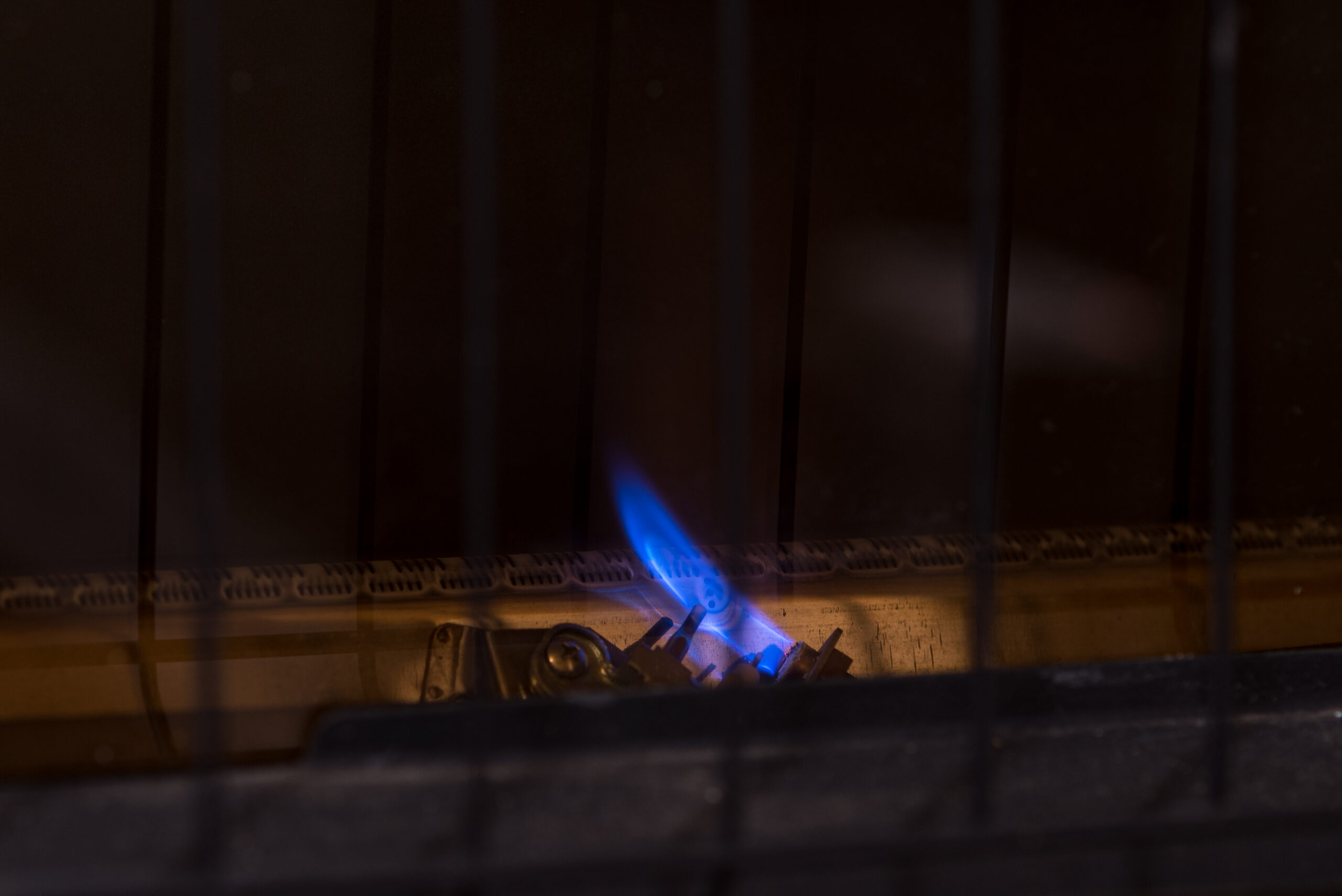
The first sign is usually waking up to a cold house. Before you even get out of bed you feel the air that’s got an edge to it. The thermostat says the heat’s been running for hours, but the house disagrees. You head downstairs to the furnace, and there it is: the pilot light is out.
Relighting your furnace’s pilot is a job that you can absolutely handle on your own. But if you’ve already relit it more than once this season, it could be a sign of something more than just another annoyance around the house.
The Mattioni family has been helping keep homeowners comfortable throughout winter for over 75 years. We’ve seen all sorts of furnace issues, and relighting the pilot is one of the more straightforward DIY fixes.
Here’s how to you can tackle the job yourself.
- How to Relight a Furnace Pilot Light Yourself
- Why Does My Furnace Pilot Light Keep Going Out?
- Is a Recurring Pilot Light Problem Telling You Something Bigger?
DIY Tip: If you’ve heard popping or rumbling from your tank before the pilot light went out, it could mean there’s sediment buildup and is worth paying attention to.
How to Relight a Furnace Pilot Light Yourself
The exact step-by-step instructions are usually printed on the furnace, on or near the access panel covering the burner. Before you touch anything, check for that, as steps can vary slightly between models. The only tool you’ll need is a long-neck lighter.
DIY Tip: Snap a photo of the instructions on your tank’s label before you start, so you’re not hunting for them later with dirty hands.
Here’s how to relight a pilot light for most furnaces:
1. Locate the gas control valve on the unit. Turn it to “Off.” Wait about five minutes so gas clears out of the housing.
2. Turn the valve to the “Pilot” setting.
3. Press and hold the reset button while lighting the pilot through the small opening next to it with a long-neck lighter.
4. Continue holding the button for 30 seconds after the flame catches. This gives the shut-off safety sensor (thermocouple) enough time to heat up and hold the valve open on its own.
5. After 30-60 seconds, release the button and turn the valve to “On.” The pilot should now burn continuously without assistance.
If it lights and stays lit, then you’re done, and there’s nothing left to check or maintain until it happens again. If it won’t stay lit after two or three attempts, stop trying and continue reading, as it’s likely a different problem.
Did you know? Your tank’s manufacture date is hidden in the first few digits of its serial number, so that’s where to look if you’re not sure how old yours is.
Why Does My Furnace Pilot Light Keep Going Out?
A pilot that suddenly needs relighting once usually isn’t a big deal. But if it keeps going out, then there’s a cause that needs to be addressed. It could be a handful of things.
A draft is the simplest explanation. A gust from a nearby door, a window, or even the furnace’s own air handler can inadvertently blow out a standing pilot, especially in an older furnace closet that wasn’t sealed well. This isn’t unheard of in older homes across Chester, Montgomery, and Delaware Counties.
A clogged or dirty pilot orifice is another frequent cause. Over months of sitting idle or running continuously, dust and debris can build up around the tiny opening the gas flows through, resulting in a weak, unstable flame that flickers out.
A worn thermocouple is a common cause of a pilot light that relights but won’t stay lit. Thermocouples degrade with age and use, just like any component that sits in a flame day after day, year after year. Eventually, it stops reading the flame accurately and shuts the gas valve even when the pilot is burning normally.
A gas supply issue may also be the culprit. A nearly empty propane tank, a partially closed shutoff valve, or, less commonly, something further up the supply line. This one’s worth ruling out if relighting doesn’t hold at all.
Each of these has a different fix. And “why does it keep going out?” is a more useful question than “how do I relight it?” The relight should be the easy part. Figuring out which of these four potential causes is actually happening is your next step.
Is a Recurring Pilot Light Problem Telling You Something Bigger?
Standing pilot lights are a piece of older technology. Many furnaces built in the last 10 years have moved to an intermittent pilot (electronic spark) or hot-surface ignition, which lights the burner directly and doesn’t keep a flame burning around the clock. In other words, this whole issue simply doesn’t exist on a newer system.
Take note of your system’s age, since most gas furnaces are built to last around 15 years. A pilot light issue doesn’t necessarily mean your furnace is on its last leg. Replacing individual components like a thermocouple could be a relatively small, inexpensive fix to the problem.
But if a pilot light issue shows up alongside other things (rising heating bills, uneven heating throughout the home, or frequent repairs), then it’s worth looking at the whole picture rather than treating each symptom as a separate inconvenience. Our guide on failing furnace parts is a good next read, and our piece on condensing furnaces covers what a modern, pilot-free system actually looks like if you’re weighing your options.
When It’s Time to Call a Professional
Relighting the pilot is a DIY job. And knowing what causes it to keep happening is useful. But a few situations go beyond what a relight can safely resolve:
- The pilot won’t hold a flame after two attempts at relighting it.
- It’s gone out more than once or twice a season.
- You smell gas at any point.
- Your carbon monoxide detector goes off. This signals an emergency.
- Your furnace is older, and this is one of several repairs you’ve needed recently.
Any of those is a sign that the issue is somewhere in the thermocouple, the gas supply, or the burner assembly itself. Those are exactly the kinds of issues that need a trained technician’s hands, not just a lighter.
A heating repair or tune-up visit from Mattioni’s team provides a valuable assessment of your equipment. Here are 5 smart questions to ask your HVAC technician during their visit, to help prepare to get the most out of your tune-up.
The plan from here is simple: if what you’re seeing matches the list above, it’s a clear sign to stop relighting attempts and get a technician out. We’ll pinpoint where the issue is coming from, whether it’s a part that can be fixed or replaced, and in many cases, get your furnace running properly again during a single visit.
Give us a call at (610) 400-8510 or book online. We’re here to answer all of your questions, so that you have as much information as possible when making decisions about your home’s comfort systems. The Mattioni family has been helping homeowners since 1948. Our goal is the same as yours: to get your furnace running smoothly all winter long, so that you can enjoy your home and focus on the things that matter.