
Plumbing Education · 8 min read · Last Revised: April 2026
What Causes Low Water Pressure at Home?
The honest guide to diagnosing weak water flow. What's causing it, how serious it is, and exactly what to do next.
Low water pressure is most commonly caused by a partially closed shutoff valve, mineral buildup or corrosion in pipes, a hidden water leak, a failing pressure regulator (PRV), sediment in your water heater, or issues with your municipal water supply. If pressure is low throughout the whole house and dropped suddenly, treat it as urgent. It may signal a leak or failing component. If it's isolated to one fixture, start by cleaning the aerator or showerhead.
You turn on the shower expecting a strong, steady stream, but what you get is barely enough to rinse the shampoo out. Or you're at the kitchen sink and the water limps out while the dishwasher runs. Whatever the scenario, low water pressure isn't just annoying. It's your plumbing trying to tell you something.
The good news: most causes of low water pressure are diagnosable, and many are fixable without major disruption to your home. This guide walks you through every common culprit, from the simplest to the most serious. After reading, you'll know exactly where to start and when to call a professional.
01The Seven Most Common Causes of Low Water Pressure
Pressure problems can originate anywhere between your municipal water supply and the fixture in your bathroom. Here's a clear breakdown of what's most likely causing yours, ordered from quickest-to-check (DIY) to most complex.
A Partially Closed Shutoff Valve
This one sounds almost too simple but it's one of the most common causes we see, especially after any recent plumbing work or home service. Your home's main shutoff valve is typically located where the main water line enters the house. If that valve isn't fully open, it restricts flow throughout the entire home. Check it first: gate valves should be turned fully counterclockwise; ball valves should have the handle aligned parallel with the pipe. If the valve is even slightly off, it can make a noticeable difference in your water pressure.
Clogged Faucet Aerators or Showerheads
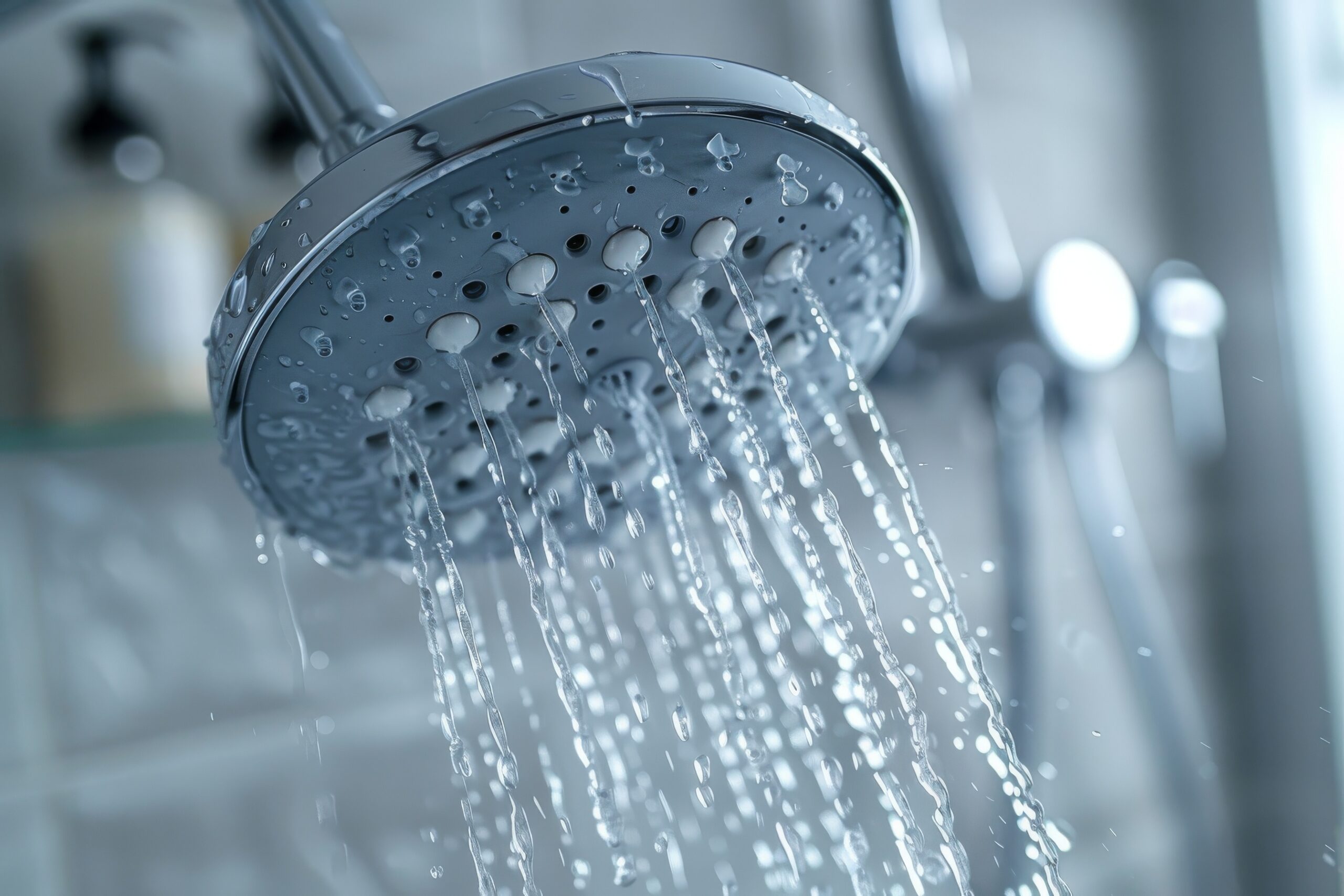
If low pressure is isolated to a single fixture (one bathroom sink or one showerhead) your pipes likely aren't the problem at all. Aerators (the small screen caps at the tip of faucets) and showerheads collect mineral deposits over time and can become substantially blocked. Remove the aerator, soak it in white vinegar for a few hours, scrub away the buildup, and reinstall. If that doesn't restore flow, replacing the aerator or showerhead is inexpensive and simple. This is the first thing to check when only one fixture is affected.
Clogged or Corroded Pipes
Over time, minerals naturally present in water (most commonly calcium and magnesium) build up inside your pipes and narrow the channel water flows through. This is especially common in older homes throughout the Greater Philadelphia area, where galvanized steel plumbing is still widespread. As corrosion sets in from the inside out, the resulting sediment buildup partially blocks flow and steadily worsens pressure over time. If your home is older and you're dealing with persistent, gradual pressure loss throughout the house, aging pipes may be the root cause. Repiping with copper or PEX is often the long-term answer.
A Hidden Water Leak
If water is escaping your plumbing before it reaches your fixtures, your pressure will suffer, even if you can't see the leak. A slow, hidden leak inside a wall, under a slab, or beneath the yard can divert enough water to cause noticeable pressure loss throughout the home. Watch for signs beyond just low flow: unexplained spikes in your water bill, damp patches on walls or ceilings, soft spots in flooring, or the sound of running water when nothing is on. If you suspect a leak, don't wait. What starts as a pressure problem can become significant structural water damage, and the longer it goes undetected, the more expensive the repair.
What is a Leak Breaker Valve?
A Failing Pressure Regulator (PRV)
Not every home has a pressure-reducing valve (also called a pressure regulator), but if yours does, a failing PRV can cause sudden and significant pressure drops. This device brings incoming municipal water pressure down to a safer, more manageable level for your home's plumbing. When it malfunctions, pressure can plummet (or spike) without warning. You'll typically find a PRV near where the main water line enters the home. If your pressure dropped suddenly and you've ruled out the obvious causes, a PRV may be a prime suspect. Replacement requires a licensed plumber and is not a DIY job.
Sediment in Your Water Heater
If you're experiencing low pressure specifically with hot water (but your cold water seems fine) your water heater is likely involved. Sediment buildup inside the tank can restrict water flow, and a partially closed shutoff valve on the heater itself can reduce hot water delivery throughout the home. This is worth checking early if the issue is isolated to the hot water side. A plumber can flush the tank to clear sediment or identify whether a full replacement makes more sense for the long term.
Municipal Supply Issues or Peak Demand
Sometimes low water pressure has nothing to do with your home at all. High usage times like early mornings and evenings, local infrastructure maintenance, or issues with the city's water system can temporarily reduce pressure. If your pressure drops only at certain times of day and then recovers, call your water utility company before calling a plumber. They can confirm whether there are known issues in your area. This is also more common in neighborhoods undergoing nearby construction or infrastructure upgrades.
Not sure which cause applies to your home? Mattioni's licensed plumbers diagnose low pressure problems throughout Chester County, Montgomery County, Delaware County, and surrounding areas.
Schedule a Diagnostic02How Do You Know If Low Water Pressure Is Serious?
Not every pressure problem is an emergency, but some are. Here's a clear way to think through where yours falls.
Start with the aerator or showerhead. Clean or replace it. Check the fixture's individual shutoff valve under the sink. This is likely not a piping issue.
Check the main shutoff valve first. If that's open, then the issue is likely with your PRV, your pipes, the municipal supply, or a whole-house leak. Call a plumber if it doesn't resolve quickly.
Treat this as urgent. A sudden change often signals a leak or a failing pressure regulator. Both of which get worse over time. Don't wait.
Check the shutoff valve on your water heater and look for sediment buildup. This is usually a water heater issue, not a whole-system problem.
03What Is Normal Water Pressure for a Home?
For context: healthy residential water pressure falls between 40 and 80 PSI (pounds per square inch). Pressure below 40 PSI is considered genuinely low and warrants investigation. Pressure above 80 PSI can actually damage your pipes, appliances, and fixtures over time.
An inexpensive water pressure gauge (available at hardware stores) threads onto any outdoor hose bib. Turn the hose fully on and read the PSI. This gives you a reliable baseline in under two minutes. Ideal range is 45–65 PSI for most homes.
If your pressure fluctuates significantly throughout the day rather than staying consistently low, the issue is more likely with peak municipal demand or a failing PRV than with your pipes. Consistent, static low pressure that doesn't change by time of day points more toward buildup, corrosion, or a leak.
04Low Water Pressure in Philadelphia-Area Homes
At Mattioni, low water pressure is a common plumbing call we receive — and in older homes throughout Chester County, Delaware County, and Montgomery County, galvanized steel pipes and decades of mineral accumulation are the most common underlying causes we find on-site.
Many homes in West Chester, Downingtown, Malvern, Phoenixville, and surrounding areas were built in the 1950s through 1970s and still have original plumbing. Galvanized steel corrodes from the inside out over time, and that gradual narrowing of the pipe interior produces pressure loss that worsens year over year. If you've noticed your pressure slowly declining over the past few years rather than dropping suddenly, aging pipes are the most likely explanation.
Whether your home runs on city water or a private well, the diagnostic process starts the same way: ruling out causes from the simplest to the most complex. At Mattioni, we're straight with you about what we find.
You Shouldn't Have to Live with Low Water Pressure
Weak water flow isn't just frustrating, it can signal something more serious happening inside your plumbing system. The longer it goes unaddressed, the more limited your options become and the more expensive the fix.
Here's exactly how Mattioni approaches it when you call:
Our licensed plumbers use a systematic process to trace low pressure back to its source — no guessing, no unnecessary upsells.
Before any work is done, you'll understand what's causing the issue and what your options are — clearly, in plain language.
With 75+ years of experience serving Greater Philadelphia, we resolve the issue completely so you're not dealing with it again in six months.
Ready to get to the bottom of it? We serve Chester County, Delaware County, Montgomery county, and surrounding areas.
Book a Plumbing DiagnosticFrequently Asked Questions
Ready to Find Out What's Causing Your Low Water Pressure?
Mattioni's licensed plumbers serve homeowners throughout Chester, Delaware, Montgomery, Berks, and Lancaster counties — with 75+ years of experience and a reputation built on straight answers.
You may also find these helpful:
- Leak Detection Services — Mattioni
- Water Line Services — Mattioni
- Water Heater Services — Mattioni
- Plumbing Pricing — Mattioni
- EPA: Fix a Leak Week — WaterSense
Jarod Meyer is the Content Manager of Mattioni Plumbing, Heating & Cooling's Learning Center. With a background in B2C marketing and digital journalism, he has researched and written more than 270 articles covering plumbing and HVAC while collaborating with Mattioni's licensed technicians to ensure accuracy. Read More
The information on this page is for educational purposes only and is deemed accurate but not guaranteed. All plumbing conditions vary; contact a licensed plumber for assessment specific to your home. Contact Mattioni for details.