
Quick answers: plumbing checks for buying & selling a home
When buying a home, focus on four critical components: the main shutoff valve (free of leaks and corrosion), the water pressure (ideally 70 to 80 psi, since 80 psi is the code maximum), the water heater (under 10 years old with no corrosion or leaks), and the sump pump (working properly and not near the end of its life). Checking these before you sign can save you from expensive surprises after you move in.
Before listing, make sure your critical components are in good working order, specifically the main shutoff valve, sump pump, and water heater. These are the items most likely to appear on a home inspection report, and fixing a small issue early is almost always cheaper than handling it under a negotiation deadline.
Healthy home water pressure sits around 70 to 80 psi, and standard plumbing code caps it at 80 psi. Pressure above that stresses your pipes, fixtures, and appliances over time, while pressure that is too low can point to buildup, a failing pressure regulator, or a supply problem. You can check yours with an inexpensive gauge from any hardware store.
Check the manufacturer's label on the side of the tank and find the serial number. For most brands, the first four digits tell you the month and year it was made, so a serial that starts with 0618 means June 2018. If the serial is hard to read, a quick online search of the brand and serial number usually gives you the age.
Water conditioning upgrades tend to stand out most with today's buyers. Popular options include a whole home water softener, a leak detection system with an automatic shutoff valve, upgraded fixtures and toilets, a Seagull IV drinking water filter, and a city water or well water treatment package matched to the home's water source.
Yes. A standard home inspection almost always includes the plumbing, and inspectors check the same critical components covered here, from the shutoff valve to the water heater. For homeowners across Chester, Delaware, and Montgomery counties in SE Pennsylvania, a pre-listing plumbing inspection from Mattioni can catch issues before they reach the buyer's report.
Last Revised: 8/12/26
Buying or selling a home is one of the most important decisions you’ll ever make, but the process can become daunting. From staging and touring to inspections and negotiating, there’s no shortage of checkpoints before you cross the finish line and finalize your home sale.
Suffice it to say, there’s much to be done.
One of the most commonly overlooked areas by both buyers and sellers? The home’s plumbing system. It’s usually out of sight, out of mind, but a plumbing system’s condition deserves some attention because it can make or break a home sale. A glossed-over plumbing issue can rear its ugly head during negotiations, and potentially lead to a variety of undesirable outcomes.
You don’t have to be a plumber to know what matters and how to get ahead of it. It only takes a few minutes to understand the plumbing essentials that every buyer and seller should have on their radar.
One of our certified plumbers, Daniel Tyler, met with Janelle Thomas, a local Realtor of Coldwell Banker Realty’s Exton, PA office, to talk about what you should look for in a plumbing system when buying or selling a home. Here’s a practical checklist any home buyer or seller can use.
What Should You Look For in a Plumbing System When Buying a Home?
When it comes to the home’s plumbing system, there are four critical components worth checking on when looking at disclosures for any home you’re seriously considering. The goal is straightforward. You’re looking to understand the condition of the home and its utility systems before you sign anything.
1. The main shutoff valve
It controls all the water coming into the house, so if you ever have an issue (like a leak or a burst pipe), you’ll need to know how to get there quickly to shut it off.
What to look for: A valve that’s free of leaks and corrosion. A main shutoff valve that shows signs of mineral deposits, makes a noise, or is unable to easily open and close is a small red flag that may point to larger issues elsewhere in the system. If possible, try opening and closing the valve to see if it’s in working order.
2. Water pressure to the home
Healthy water pressure is around 70 to 80 psi, and standard plumbing code goes no higher than 80 psi.
What to look for: A quick pressure gauge test tells you a lot about how the whole system has been treated. Pressure over 80psi will put constant stress on everything hooked up to your plumbing system. That’s your pipes, fixtures and appliances. If left unaddressed, high water pressure can shorten the lifespan of all of these. On the flip side, pressure that’s too low can be a sign of corrosion buildup, a failing pressure regulator, or a supply issue.
You can check it yourself with a water pressure gauge. They’re inexpensive and available at any hardware store. To find your home’s water pressure, first make sure all taps, tubs, and appliances are turned off. Then, just screw the gauge onto an outside spigot, open the tap fully, and read the dial. It’s a straightforward test that gives you a clear answer to the question of the home’s water pressure.
3. The water heater
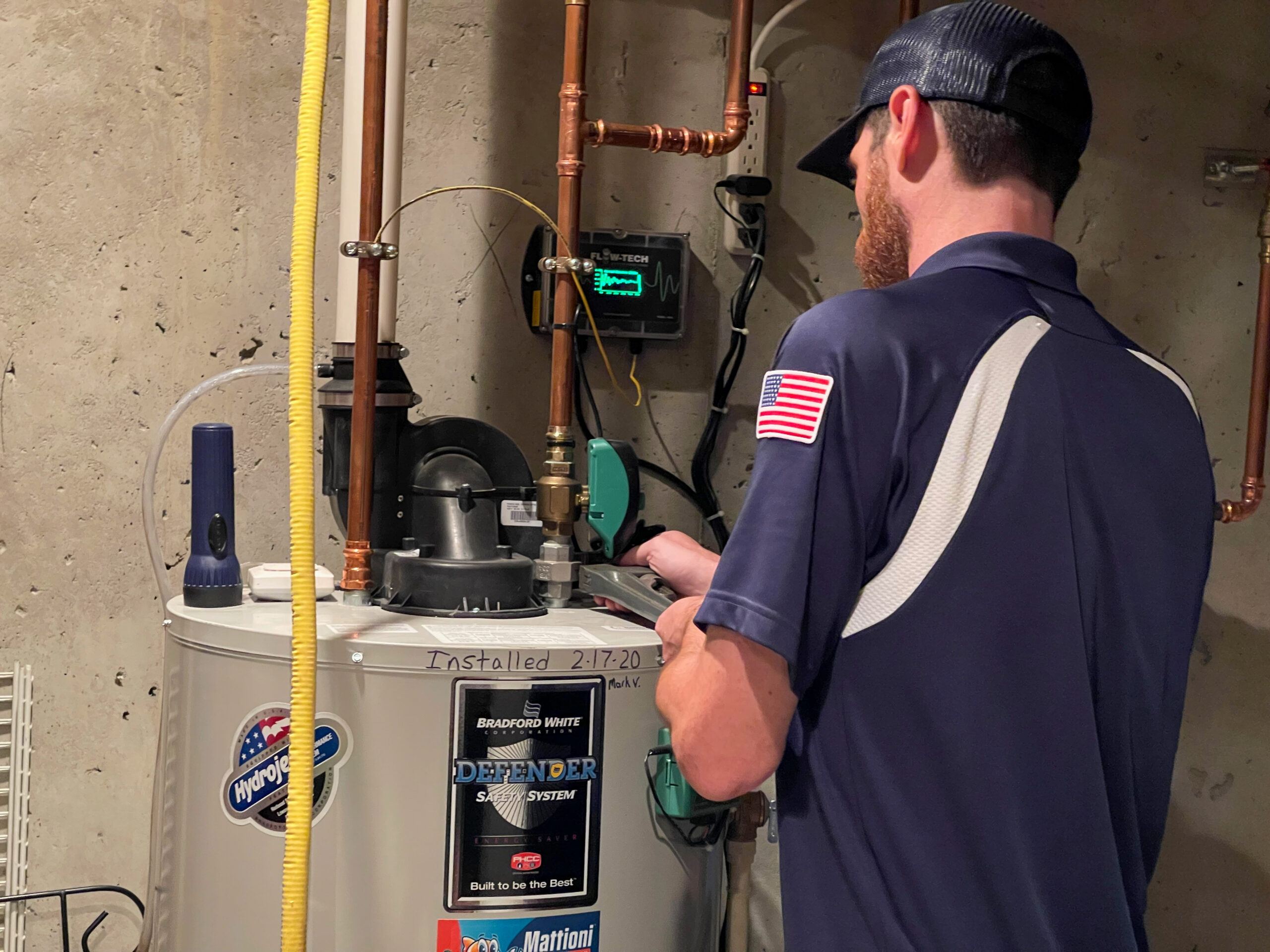
Make sure you get the water heater’s age before you sign anything. Many homebuyers are caught off-guard to find it’s close to the end of its lifespan and must be replaced within the first few years in the home.
What to look for: Generally, you don’t want a water heater that’s over 10 years old. Look for any signs of issues like corrosion or leaks around the tank. The water heater’s condition is often worth factoring into your decision on the home.
Pro Tip: Not sure how old it is? Check for the serial number on the manufacturer’s label on the side of the tank. The first four digits will usually tell you the month and year it was made. So a serial number starting with 0618 means it was made in June 2018. And if the number doesn’t help much at first glance, a quick search of it usually gives you the answer.
4. The sump pump
This is especially important if the home is in a flood zone. A reliable sump pump is your basement’s defense against water damage during heavy rain.
What to look for: Make sure the sump pump is working properly. Pour water into the pit to confirm it kicks on. It’s a quick test that can save you from a flooded basement.
Pro Tip: Ask the seller if they have a battery backup to the sump pump. Sump pumps are most often needed during storms that can knock out power.
How Should You Prepare Your Home’s Plumbing Before Selling?
When selling your home, think like a buyer. They’ll be looking closely at all critical components and will almost surely hire a home inspector before taking any serious steps forward with a purchase. That inspection report can work for or against you during negotiations. A little plumbing preparation goes a long way towards keeping your sale on track.
Start with your critical components
Before listing your home, confirm with a professional that the essentials are in good working order. Specifically, your main shutoff valve, sump pump, and water heater. These are the things that can show up in an inspection report that could slow momentum after engaging with buyers.
Addressing a small problem like a minor leak or a faulty sump pump ahead of time is almost always cheaper than handling it under a negotiation deadline. Getting a ballpark on repair costs during an inspection before listing will help you decide what’s worth handling now and what isn’t for your specific home.
Buyers often make a home purchase decision based on stacking emotional moments that resonate with their perception of the home, and anything that slows down how those moments are stacked can lead people to disengage. Going to market with the strongest listing possible is a proven strategy to close faster and at your asking price.
Want to make your home stand out? Consider these upgrades
If you’re looking to give buyers a reason to choose your home over one down the road, plumbing upgrades can be a true selling point. Most notably, water quality improvements are something more and more homebuyers are asking about. Here are a few options worth thinking about.
- Water conditioning systems: A whole-home water softener is a popular upgrade for homes with hard water, which is more common than many people realize. Water softeners effectively protect your plumbing system and every water-using appliance in the house.
- Leak detection and automatic shutoff valves: Installing a modern system that senses leaks and shuts off the water immediately can impress buyers seeking real peace-of-mind.
- Upgrade fixtures and toilets: New, efficient fixtures make bathrooms and kitchens feel newer and more move-in ready without the work of new cabinets or countertops.
- A Seagull IV drinking water filter: A premium point-of-use filter for clean, great-tasting water straight from the tap.
- A city-water or well-water package: A treatment package tailored to the home’s water source shows buyers their water quality has already been handled for them.
It probably isn’t feasible to make all of these updates before listing your home. The best way to figure out where you’ll get the most bang for your buck is with a plumbing inspection from our expert team of plumbers. For a head start on the conversation, check out our water conditioning buyer’s guide.
A Little Plumbing Knowledge Today Saves a Lot of Stress Tomorrow
Whether you’re a buyer or a seller, plumbing should be a part of your process. These checks all come down to the same idea: know what you’re working with ahead of time.
A quick test of the shutoff valve, water pressure, water heater, and sump pump can give you confidence before signing anything. When you’re selling, a targeted upgrade can turn your plumbing from a question mark into a feature.
1. Know the four critical components: shutoff valve, water pressure, water heater, and sump pump.
2. Schedule a professional plumbing inspection with Mattioni’s licensed technicians, who serve homeowners across Chester, Delaware and Montgomery counties.
3. Move forward with confidence. Buy, sell, or upgrade knowing exactly where your plumbing stands.
We’ve been doing this for over 75 years. If you’re buying or selling and want a trusted set of eyes on the plumbing, give us a call at (610) 400-8510 or book an appointment online. A little knowledge today can avoid the stress of tomorrow.