

Quick answers: water heater pilot light
It is usually a clogged intake screen, a worn thermocouple, or a gas supply issue. Sealed tank water heaters have a fine mesh screen that keeps out flammable vapors, and that screen can catch lint and dust, especially near a laundry area. A one time outage is often a simple relight. One that keeps happening points to one of these parts needing attention.
In most cases, yes. Water heaters installed since the early 2000s use a sealed system with a red igniter button on the control valve, so no match is needed. Older units have a standing pilot you light with a long neck lighter through an access port. Check the label on your tank to see which type you have.
Not necessarily. A thermocouple or intake screen issue is fairly routine and often a simple repair. But if your water heater is 8 years or older and this problem shows up alongside other issues, it is worth knowing where your tank stands in its expected lifespan of 8 to 12 years.
Call a professional if the pilot will not hold a flame at all, it has gone out twice or more within a year, you smell gas near the water heater, or you notice moisture, rust, or pooling water around the base of the tank. Any of those point to something beyond a quick DIY fix.
A healthy pilot light should burn continuously for months or years at a time. Needing to relight it more than once or twice in a year is a sign something else is going on.
Last Revised: 8/27/26
Ever gotten a cold-water surprise in the middle of a shower? Or a kitchen tap that refuses to get hot? Water heater issues are immediate and feel personal – they don’t care who they’re inconveniencing. If your water heater’s pilot light has gone out, it can be more than frustrating. But it typically is something you can handle yourself. The Mattioni family has been doing this for over 75 years. We’re here to help anyone find answers to their hot water questions.
Here’s how to relight your water heater’s pilot light on your own, and what to do if it won’t stay lit.
- How to Relight a Water Heater Pilot Light Yourself
- Why Does My Water Heater Pilot Light Keep Going Out?
- Is a Recurring Pilot Light Problem Telling You Something Bigger?
How to Relight a Water Heater Pilot Light Yourself
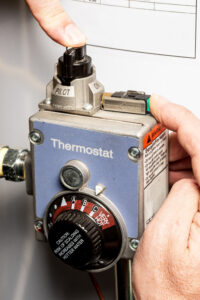
Before you touch anything, look at your control valve (the dial near the bottom of the tank). Water heaters have two main setups, ignitor buttons and standing pilot designs, so you’ll want to know which one applies to yours before taking any steps.
If your gas control valve has a red igniter button on it, your water heater is a sealed, self-contained system with no flame access point. This design is common on tanks installed since the early 2000s and doesn’t require lighting it with a lighter. Instead, turn the dial to “Pilot,” press the dial in and hold it, then press the red ignitor repeatedly while looking through the sight glass until the pilot flame catches. This may take several presses of the ignitor. Once it’s lit, hold the dial in for 60 seconds before releasing it and turning the dial to “On.” The pilot should now burn continuously on its own.
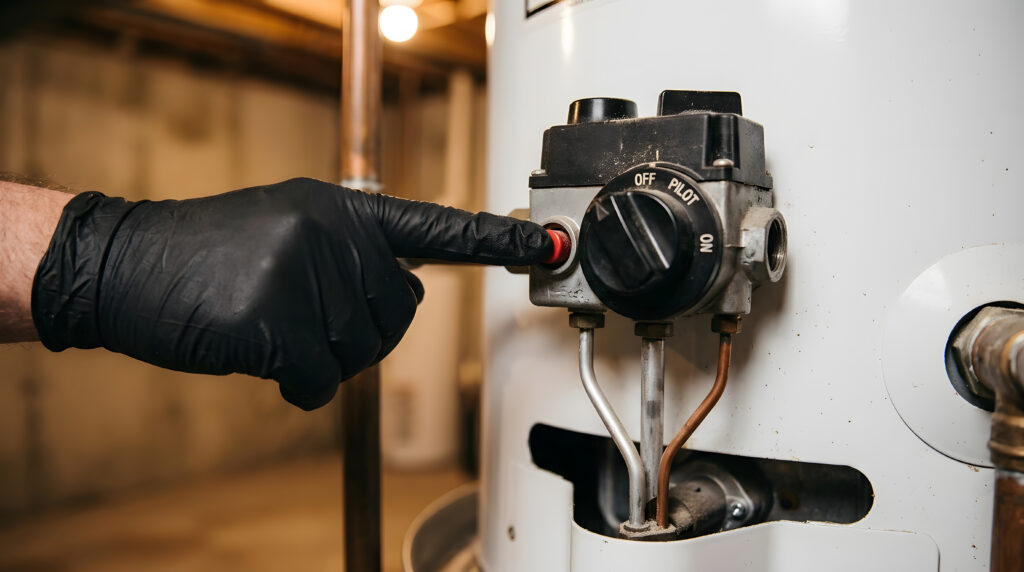
If your water heater has an older standing-pilot design with a visible access port, the process is much like relighting a furnace’s pilot. First, turn the gas valve to “Off” and wait five minutes for all gas to clear out. Then, turn it to “Pilot,” hold the reset button, and light the pilot with a long-neck lighter. After the flame catches, continue to hold the lighter for 30 seconds so the thermocouple heats up enough to hold the valve open. Then release the lighter and turn the valve to “On.”
Not sure which process applies to your water heater? There should be a label on the tank itself that shows the model’s diagram. It’s worth verifying this label before you start, as some details of relighting your water heater’s pilot may vary. Once the flame catches and holds, you’re done. If it won’t hold after a few tries, stop attempting and keep reading, as it’s a different process that requires a different fix.
Why Does My Water Heater Pilot Light Keep Going Out?
If you’ve relit your water heater’s pilot several times this year, it’s time to stop relighting it and look for the underlying cause.
A clogged intake screen is a common culprit in sealed-combustion tank water heaters (the kind with the red ignition light). They have a fine mesh screen that’s built-in to keep flammable vapors out. That screen also inevitably catches dust and lint, especially if your water heater sits in or near a laundry area, or in an unused basement. This is the first thing you should check, since a clogged screen can prevent the pilot light from getting the air it needs to stay lit.
A worn thermocouple is another reason a pilot might relight fine, but fail to stay lit. This component is a safety feature that shuts off gas, but it sits directly in a flame year after year, which will eventually cause it to fail. When it does, it might shut the gas valve even when the pilot is burning normally.
A gas supply issue is also worth ruling out. If your propane tank is nearly empty, a shutoff valve is partially closed, or there’s an issue further up the line, then the pilot may not be receiving the gas it needs. If this is the underlying issue, the pilot light won’t relight at all.
A safety cutoff switch may also be tripping if the water heater overheats. This one is less common and is typically only seen on a tank that hasn’t been flushed in years. Heavy sediment buildup at the bottom of the tank can cause it to work harder and overheat, which is worth knowing regardless of what’s causing the pilot light issue.
Is a Recurring Pilot Light Problem Telling You Something Bigger?
Most water heaters run for about 8 to 12 years. If yours is on the older end of that window, it’s worth paying attention to more than just the pilot.
A thermocouple or intake screen issue is fairly routine on its own. It’s an inexpensive and expected parts replacement that a tank goes through over its lifetime. Sediment buildup is worth understanding separately, though, since it affects everything from noise level to efficiency to how long the tank itself lasts. Our guide on how to flush your water heater covers what you can do about it.
Separately, if you’re noticing any dampness or a small leak around the base of the tank, that’s a more urgent issue on its own. Our piece on whether a leaking water heater needs to be replaced is worth reading before anything else. And if you’re wondering where your tank stands in its expected lifespan, that’s a good next stop.
When it’s Time for a Pro
Relighting the pilot yourself is the first step that most homeowners can handle on their own. Understanding why it keeps happening is a really useful piece of information. A few clear situations go beyond the standard relighting or quick cleaning you can safely resolve:
- The pilot won’t hold a flame at all.
- The pilot has gone out at least twice within a year.
- You smell gas around the water heater.
- There’s moisture, rust, or pooling water near the base of the tank.
- The water heater is over 8 years old and is dealing with additional issues.
All of these situations point to something deeper than a quick DIY fix – a failed thermocouple, gas supply hiccups, and sediment buildup in the tank. These are the kinds of things that Mattioni’s plumbing team handles day in and day out. If you live in Chester, Delaware, Montgomery, or Berks counties, you can get a same-day fix.
The plan is simple: if what you’re seeing with your home’s water heater matches the list above, it’s time to stop relighting and get a technician out. We’ll pinpoint if it’s the intake screen, the thermocouple, the gas supply, or the tank itself. We’ll fix it in a single visit and give you a straight answer if your water heater is approaching the end of its operational lifespan.
Our goal is the same as yours: hot water that’s there when you turn the tap, without a second thought. When you’re ready, give us a call at (610) 400-8510 or book a time online.
Continued Reading:
- Which Type of Water Heater is Right for Me?
- How Much Does a Water Heater Cost?
- Will a Hybrid Water Heater Lower My Energy Bills?