
Quick answers: VOCs & indoor air quality
What are VOCs?
VOCs (volatile organic compounds) are carbon-based chemicals that evaporate into the air at room temperature. They're released by hundreds of everyday household products (paint, flooring, cleaners, furniture, etc.) and indoor concentrations are typically higher than outdoors.
Are VOCs dangerous to your health?
VOCs range widely in toxicity. Short-term exposure to elevated levels can cause headaches, eye irritation, or dizziness. A small number (like formaldehyde and benzene) carry longer-term health concerns at sustained high concentrations. Ventilation and low-VOC product choices are your most effective tools to mitigate VOCs.
How long do VOCs last after painting?
Most off-gassing from standard interior paint happens within the first 24–72 hours. Low- and zero-VOC paints with good ventilation drop to near-background levels within a few days. In a poorly ventilated room, lower-level off-gassing can continue for several weeks.
What is the difference between VOC and TVOC?
TVOC (Total VOC) is a single number representing the combined concentration of all detected volatile organic compounds in the air. It gives a quick overall snapshot but doesn't identify which specific chemicals are present or whether any individual compound is at a concerning level.
Do air purifiers remove VOCs?
MERV-rated filters capture airborne particles like dust and pollen but do nothing for gas-phase compounds like VOCs. For VOC reduction, look for air purifiers with HEPA-rated filters. Even so, fresh-air ventilation (i.e. a Fresh Air Ventilator) remains the most effective long-term strategy.
Last Revised: 5/28/26
You can probably remember the smell of cracking open a can of paint, peeling the backing off new flooring, or spraying a bathroom cleaner. That unmistakable smell of cleaning products and home projects? It has a name – and a category: volatile organic compounds, or VOCs.
The reality is that they’re everywhere in a typical home. And while the name volatile organic compound may sound alarming, understanding what VOCs actually are will help you make informed, proactive choices about your home’s indoor air quality rather than anxious, reactive ones.
That’s exactly why we put together this guide. To give you everything you need to know in plain language: what VOCs are, where they come from, what the health considerations really look like, and what you can do about them as a homeowner.
What are VOCs?
“Volatile” means that the substance becomes a gas easily (at or near room temperature). “Organic” means that it contains carbon. And “compound” simply means it’s a chemical substance made of more than one element.
In plain terms: A VOC is a chemical that becomes a gas at room temperature and drifts into the air around you.
The biggest thing to understand about VOCs is that the term is a category, not a single chemical. The category encompasses hundreds of different compounds with very different properties. Formaldehyde, benzene, toluene, acetone, and xylene area all VOCs. So is ethanol, which is in hand sanitizer, and limonene, which is in many citrus-scented cleaners.
Being a VOC alone doesn’t necessarily tell you whether something in your air is dangerous. In fact, some VOCs are relatively harmless. And they’re more common than you may think.
Volatile organic compounds arise from products and materials used in virtually every home, and some will hurt indoor air quality and may pose health risks.
Common Examples of VOCs in Your Home
Paint and Finishes
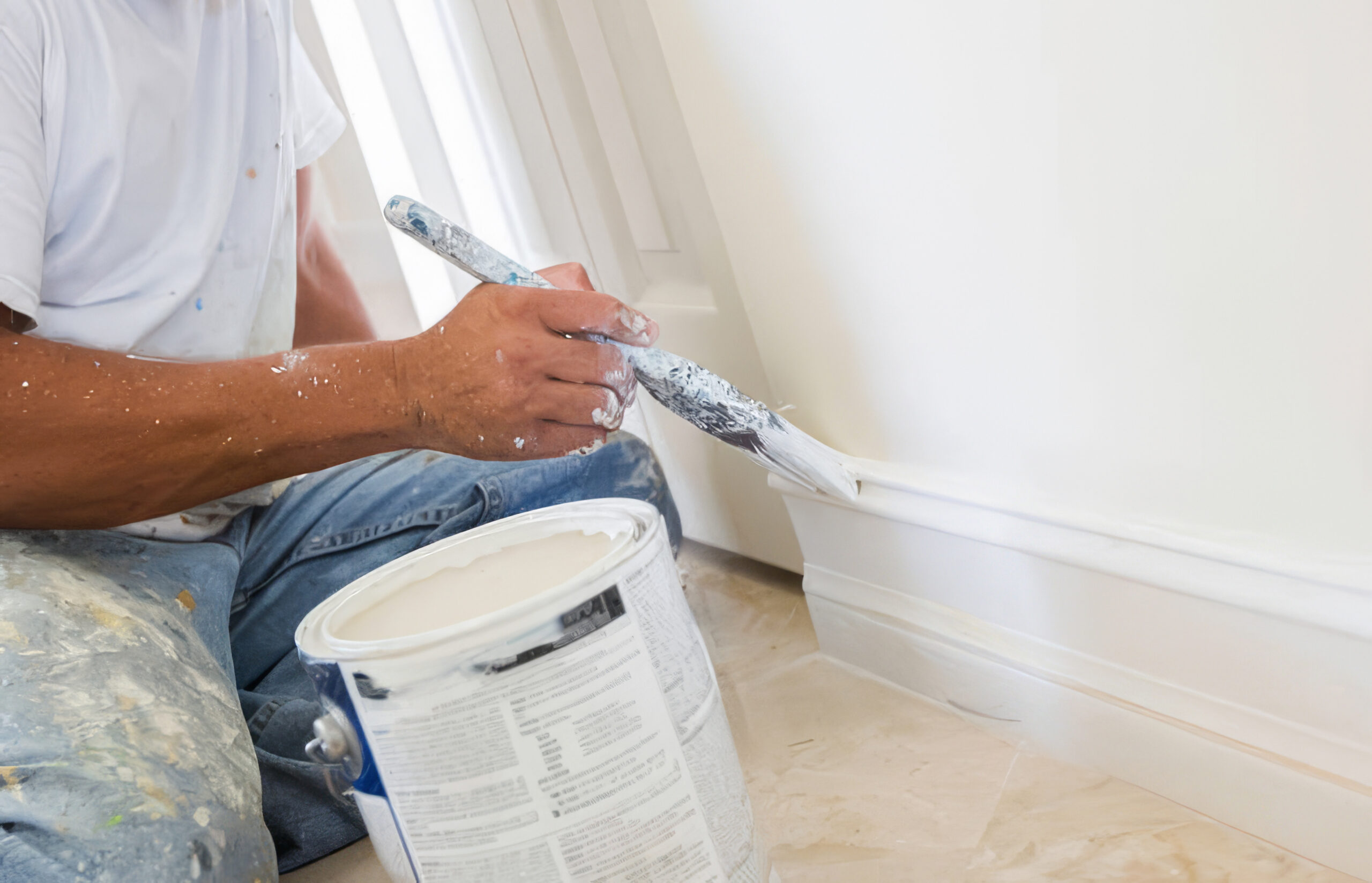
Interior paint is one of the most discussed VOC sources because freshly painted rooms smell strongly and people occupy them immediately after. VOC content in paint is measured in grams per liter (g/L).
- Conventional paint can run 150-400g/L
- Low-VOC paints are typically under 50/g/L
- Zero-VOC options come in under 5 g/L
The good news is that low and zero-VOC paints have improved substantially and now match conventional formulas in performance and surface coverage.
Flooring and Adhesives
Laminate, vinyl plank, carpet, and the adhesives used to install them all release VOCs (usually formaldehyde), a process commonly called off-gassing. The smell from new flooring can linger for days, and actual chemical release continues at lower levels for months, especially from products with pressed wood.
Pressed-Wood Furniture and Cabinetry
Particleboard and MDF (the materials behind most flat-pack furniture and many kitchen cabinets) are bonded with urea-formaldehyde resins. These materials off-gas continuously, especially when the products are new. Solid wood furniture does not have this issue.
Cleaning Products
Many conventional sprays, degreasers, and disinfectants contain VOCs. Aerosol products are especially effective at dispersing them into the air quickly. Fragranced products (including air fresheners, fabric sprays, and even scented candles) add additional compounds to the mix.
Personal Care Products
Hairsprays, nail polish, and nail polish remover, perfumes, and some dry-cleaning chemicals all contribute VOCs to the air that circulates your home. Especially in bathrooms and laundry rooms with limited ventilation.
Combustion Sources
Gas stoves, wood-burning fireplaces, and indoor cooking devices introduce combustion byproducts directly into living spaces.
The EPA has found that indoor VOC concentrations are typically two to five times higher than outdoor levels, and in some situations (like after painting, installing new flooring, or bringing in new furniture), the gap can be far larger.
Interior paint, varnish, stain, primer
Laminate, vinyl, carpet, installation glues
Particleboard, MDF, flat-pack cabinets
Sprays, degreasers, air fresheners
Hairspray, nail polish, perfume
Gas stoves, fireplaces, attached garages
How Long Do VOCs Last After Painting or Renovation?
The time it takes for VOCs to disperse fully depends on the product, the room’s ventilation, and whether you’re dealing with a surface that’s drying off (like paint) or a material that off-gasses continuously (like pressed wood).
With standard interior latex paint, most off-gassing happens in the first 24 to 72 hours. By opening windows, the chemical concentration in your air will drop significantly by day three. Low and zero-VOC paints reach near-background levels faster, especially with good airflow.
New flooring and furniture off-gas over a longer timeline (often months) because the VOCs are embedded in the materials rather than evaporating off a drying surface.
In tightly sealed homes (newer energy-efficient builds), these timelines can extend further as there’s less natural air exchange to dilute concentrations.
Are VOCs Dangerous to Your Health?
This is the question most homeowners want an answer to. The straightforward answer is that it depends on which specific compounds are present and at what concentrations.
Short-Term Effects
If you’re exposed to elevated levels of VOCs, you may experience:
- Headaches
- Dizziness
- Eye or throat irritation
- Nausea
These effects are real but typically pass quickly once you get fresh air and VOC concentrations drop. People with asthma, allergies, or chemical sensitivities often notice symptoms at lower levels than the general population.
Long-Term Concerns
There are specific VOCs that pose more serious concerns, particularly when they’re sustained at higher concentrations:
- Formaldehyde is present in pressed wood, some insulation, and older paint formulas. It’s classified as a known carcinogen.
- Benzene, which can enter homes through smoke sources, adhesives, paints, or other building supplies, is another compound with long-term risks.
The groups needing protection from formaldehyde and benzene the most are young children, older adults, pregnant women, and anyone with respiratory conditions. If any of those apply to your household, being deliberate about ventilation and product selection (especially during renovations) is especially important.
Here’s the main takeaway: VOCs are worth managing, but they’re usually not a reason to panic. Most of the risk comes from specific compounds at sustained concentrations, and the steps to reduce exposure are practical and inexpensive.
How to Reduce VOC Levels in Your Home
The good news is that the most effective strategies are also the simplest. You don’t need to overhaul your home. Just get into a few good habits:
Ventilate during and after any renovation project
Open windows, run exhaust fans, and keep air moving for at least 48-72 hours after painting or installing new flooring. In colder months when opening windows isn’t practical, running your HVAC fan on a timed schedule still circulates air through the filter and helps dilute concentrations.
Choose low-VOC or zero-VOC products when you have the option
For interior paint, the gap in performance between conventional and low-VOC formulas has closed dramatically. For flooring, look for CARB Phase 2 compliant products or GREENGUARD Gold certification, both of which indicate lower formaldehyde emissions. These choices matter most during renovations, when you’re introducing the highest volume of new materials at once.
Air out new furniture before bringing it inside
Leaving flat-pack furniture or a new rug outside or in a garage for a day or two lets the initial off-gassing happen away from your living space. It’s a simple step that makes a measurable difference.
Store paints, solvents, and adhesives outside the living area
Partially used cans stored inside your home off-gas continuously, even when sealed. A garage or outdoor shed is a better location.
Use the right type of air purifier
MERV-rated filters are excellent at capturing airborne particles (dust, pollen, pet dander), but they do nothing for gas-phase compounds like VOCs. For VOC reduction, look for air purifiers that use HEPA-rated filters. Read more about improving indoor air quality in your home.
Think about your HVAC ventilation setup
Homes with a Fresh Air Ventilator (FAV) are already bringing in filtered fresh air continuously, which is the most effective long-term strategy for keeping VOC concentrations low. If indoor air quality is a persistent concern in your home, upgrading ventilation often delivers more lasting results than any air purifier alone. Keeping your HVAC system well-maintained is also part of the picture. A clean, properly functioning system circulates and filters your air more effectively.
What Is the Difference Between VOC and TVOC?
If you’ve used an indoor air quality monitor, you’ve almost certainly seen a TVOC reading on the display. TVOC stands for Total VOC, a combined measurement of all detected volatile organic compounds in the air. It’s typically shown in parts per billion or micrograms per cubic meter.
The value of TVOC is its simplicity: with just one number, you get a quick read on whether your indoor air quality is trending better or worse. Although it does have one stark limitation: it doesn’t tell you which specific compounds are present. A TVOC spike from mopping with a pine-scented cleaner looks identical to a TVOC spike from formaldehyde off-gassing from new cabinets, even though the health implications are vastly different.
TVOC readings are most useful for spotting patterns and cause-and-effect relationships. You may notice things like “the number jumped when I used that spray” or “levels dropped an hour after I opened the windows.” They’re a good monitoring tool, but not necessarily a substitute for knowing which specific products are contributing to your indoor VOC load.
A Note for Chester County and SE Pennsylvania Homeowners
Homes in this region span a wide range of construction, with both older models that tend to ventilate naturally and tightly sealed newer builds that prioritize energy efficiency over ventilation.
The better your home is sealed, the more intentional you must be about ventilation, because there’s less natural air exchange happening on its own.
If your home has been recently updated (new flooring, a kitchen remodel, fresh insulation) and it’s well-sealed, then active ventilation (with an FAV) is the primary way to keep indoor air quality from declining as new materials off-gas.
Mattioni has been helping Greater Philadelphia homeowners with home comfort since 1948. If you have questions about your home’s ventilation setup or want to explore your options for better indoor air, our team is here to walk you through what makes sense for your specific situation.
The Bottom Line on VOCs
Volatile organic compounds are a normal part of life in a modern home. They’re present in products you use every day. The right response isn’t alarm, it’s awareness. And when you find yourself in doubt over chemical smells, ventilation is the most straightforward way to manage VOCs.
If you’re planning a larger renovation (new flooring, a kitchen or bath remodel, new cabinetry) it’s worth thinking about ventilation before the work begins, not after. Planning at the front end, by setting up fans and considering airflow, makes the transition into your improved space a lot more comfortable.
And when you’re bringing in new furniture, allowing it to sit out on your porch for a few hours will save your home from the brunt of its off-gas VOCs.
Do you have questions about your home’s ventilation or air quality? Tell us what’s going on. Whether it’s renovation smells, persistent stuffiness, or just a home that doesn’t feel as fresh as it should. We’ll assess your ventilation setup and recommend practical options sized for your home.
You’ve invested in your home. The air inside it deserves the same attention. Call us at (610) 400-8510 or schedule your service online. We’ve been doing this for over 75 years.