
Last Revised: 1/21/26
Has a home inspector recently told you that your gas line isn’t properly grounded? Are you wondering what that means and why it’s so important?
Here’s the reality: gas line grounding (also called bonding) is a necessary step to keeping your home safe, but it’s something most people never think about. It’s critical protection that prevents electrical hazards, gas leaks, and even potential fire and explosion risks. When done correctly, it’s a straightforward job that could help you avoid a catastrophic event in your home.
In this article, we’ll cover what gas line grounding is, how it’s accomplished, and why it’s so important. After reading, you’ll understand why it’s critical and know how to check if your home’s gas line is already grounded or not.
Why Does My Gas Line Need to Be Grounded?
The metal piping that brings gas into your home can become electrically charged in a number of ways. When that happens, it needs a safe way to discharge that electricity.
The most common way your gas line might become energized is through your gas-powered appliances. Furnaces, water heaters, and other gas appliances use electricity to operate, so there’s always a chance that an electrical fault could send current through the metal gas connection. If your gas line isn’t grounded, that electricity could cause a rupture and gas leak in the tubing itself.
Lightning strikes are another major concern, especially if you have a type of gas piping called CSST (corrugated stainless steel tubing). Even a nearby lightning strike that doesn’t hit your home directly can send electrical energy through various metal systems in your house. If your gas line and other metal systems aren’t all connected to the same grounding point, the electricity can jump between them, creating electric arcs that can puncture thin-walled gas piping and cause a leak.
Proper gas line grounding is rarely talked about, but it’s vital to safeguarding your home and family.
What Does Gas Line Grounding Actually Look Like?
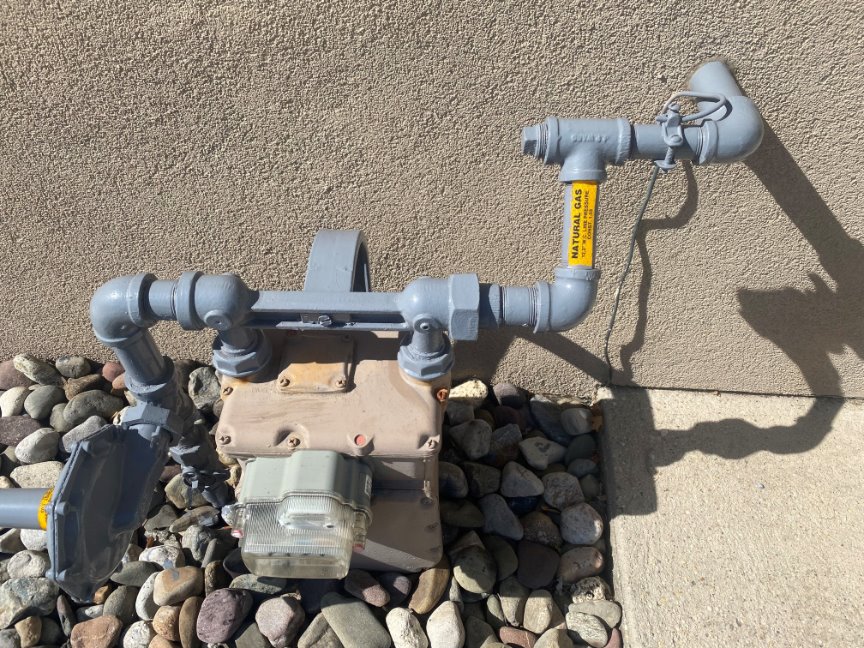
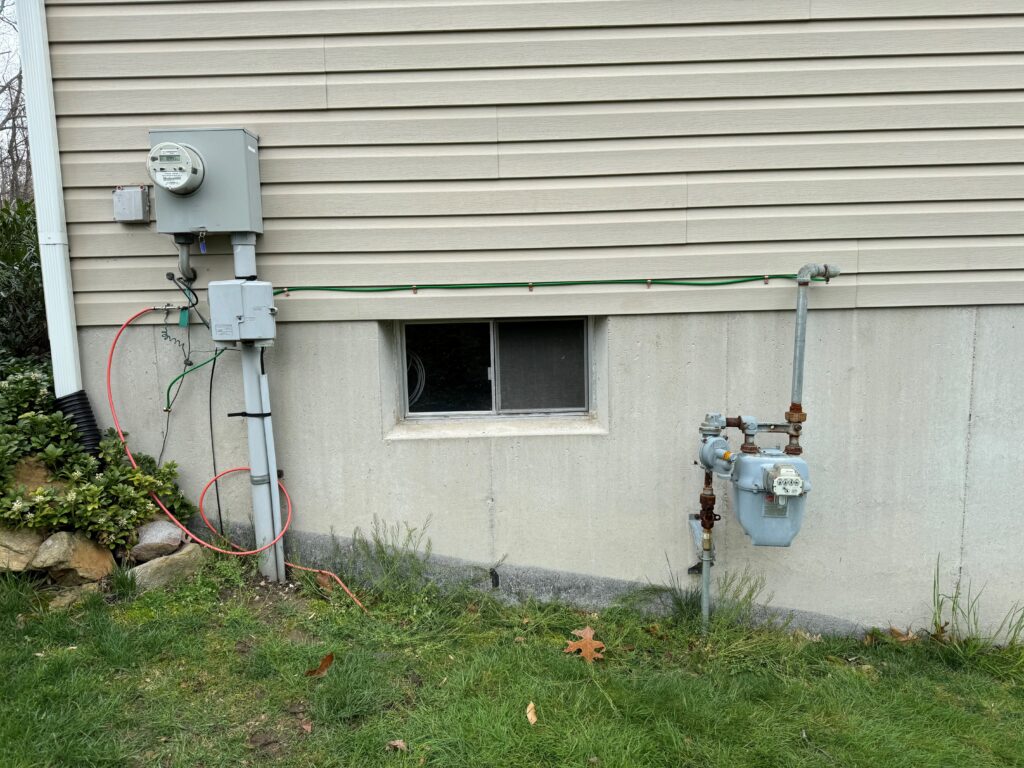
Gas line grounding (bonding) involves connecting your metal gas piping to your home’s electrical grounding system using a copper wire and specialized clamps.
For standard steel gas piping, if your gas appliances (like your furnace or water heater) were properly grounded when they were installed, the gas line is typically bonded through the appliance’s equipment grounding conductor. No additional bonding wire is needed in this case.
For CSST (corrugated stainless steel tubing) gas piping, you’ll see a dedicated 6 AWG or larger copper bonding wire. This wire connects to your gas piping with an approved bonding clamp at the point where gas enters your home, then runs to your electrical service’s grounding electrode system, typically accessible at your electrical panel or where your water pipe enters the building.
The bonding clamps must be specifically listed for gas pipe bonding and must attach to rigid steel pipe or brass fittings, never directly to CSST tubing itself. All connection points must remain accessible for future inspection.
Is My Gas Line Already Grounded?
It’s possible your gas line is already properly grounded and doesn’t need additional work, but it depends on how your specific system was installed.
If your gas appliances are connected to the grounding conductor of the circuits that power them, your steel gas piping (non-CSST) is typically considered to be bonded properly. This is normally automatic for correctly installed furnaces and water heaters.
However, if you have CSST lines anywhere in your gas piping system, you need additional dedicated grounding regardless of whether your appliances are grounded or not. CSST is a flexible yellow or black tubing that’s been around since the ‘90s. The older yellow CSST is particularly vulnerable to damage from lightning strikes and requires proper bonding to avoid potential gas leaks that could cause a fire or worse.
Home inspectors often flag missing or improper gas line grounding during the sale of a home, which is when many people first learn about this requirement.
What Are the Code Requirements for Gas Line Grounding?
For standard metal gas piping other than CSST, the code requires that the piping be electrically continuous and bonded to an effective ground-fault current path. In most cases, this requirement is satisfied when gas appliances are properly connected to grounded electrical circuits.
For CSST installations, the requirements are more stringent. CSST systems must be bonded to the electrical service grounding electrode system at the point where the gas service enters your home. The bonding conductor must be at least 6 AWG copper wire or equivalent, and it must be installed according to manufacturer specs.
Correcting missing bonding is often required before closing on a home sale, as it’s essential to home safety.

What Can Happen if My Gas Line Isn’t Grounded?
Operating without proper gas line grounding exposes your home to several serious risks that can impact both safety and property value.
The most immediate concern is the risk of electrical shock if you touch an energized gas pipe. When gas piping becomes electrically charged without proper grounding, any person touching the gas pipe could receive a dangerous shock.
Fire and explosion risks increase significantly with ungrounded gas lines, especially if you have CSST piping. If lightning or an electrical fault causes arcing on your gas line, it can create holes in the piping that allow gas to leak into your home. This can lead to gas-fueled fires or explosions.
Beyond safety concerns, missing gas line grounding can hold up real estate transactions. Home inspectors routinely check for proper grounding, and mortgage lenders often require that any deficiencies be corrected before closing. You may also face compliance issues with local building codes during any permitted work on your home.
Get Your Gas Line Properly Grounded Today
Don’t leave your home’s safety to chance. If you’re unsure whether your gas line is properly grounded, or if a home inspection has already flagged missing bonding in your home, contact Mattioni today. We’ve been protecting Greater Philadelphia homes for more than 75 years, and we understand the critical importance of proper gas line grounding.
Call us at (610) 400-8510 to schedule your gas line grounding inspection, or book it directly online. We’ll assess your specific installation, clearly explain any work needed, and provide transparent pricing.
We offer convenient scheduling that fits your busy life, and our professionals arrive ready to complete your gas line grounding correctly the first time. Protect your home with proper gas line grounding from a team you can trust.