
How to Choose the Perfect AC Unit for Your Home
How do I choose the right AC unit for my home?▾
Choosing the right AC comes down to a few decisions made in order: the system type (central air, ductless mini-split, or heat pump), the size or capacity in tons, and the efficiency level, measured by its SEER2 rating. Match each to your home's ductwork, square footage, and budget, then confirm the final specs with a free in-home evaluation from a licensed HVAC contractor.
What size air conditioner do I need?▾
Square footage is the first variable, not the whole answer. As a rough starting point, an 1,800-square-foot home tends to land somewhere around 2.5 to 3 tons, but ceilings, insulation, sun exposure, and shade all shift that range. An oversized unit leaves your air cold and clammy, while an undersized one never catches up on the hottest days, so the right size is best confirmed with a free in-home evaluation rather than square footage alone.
What is a good SEER2 rating?▾
SEER2 measures how much cooling you get for every dollar of electricity, so a higher number means lower summer bills against a higher upfront cost. Most homeowners across Chester County and the greater Philadelphia area choose units rated between roughly 14 and 20 SEER2, with 15 to 16 SEER2 the popular middle ground, offering a real step up in efficiency without a major jump in price.
Is a single-stage or variable-speed AC better?▾
Single-stage units are the most affordable but run at full power then shut off, causing temperature swings and louder cycles. Variable-speed (inverter) systems cost more upfront but run at low capacity nearly all day, delivering the quietest operation, the most even temperatures, and the best humidity control during humid Pennsylvania summers. Two-stage units, which add a quieter low stage at around 65% capacity, sit comfortably in between.
Endless scrolling on different air conditioner buying guides (like the one on Mattioni's Learning Center) is enough to make anyone want to put off replacing that old, clunky system for another year. With terms like tons, SEER2, inverters, and BTUs, the jargon is real. But so is the price tag. If the stakes feel high, well, that's because they sort of are. Choose right, and your home will be set up for long-lasting summer comfort. Choose wrong, and you could wind up playing whack-a-mole with costly repairs or uncomfortably high utility bills. AC systems can cost anywhere from $6,000 to $20,000, so no pressure, right?
Here's the good news: behind all that terminology, choosing an AC is really just three decisions, made in order. First, pick your system type, then get the size (aka cooling capacity) in the right range, and last dial in how efficiently you want it to control your comfort (operational precision and SEER2 ratings). Get those three steps right, and everything else falls into place.
So instead of handing you another glossary, we're keeping it simple with an interactive System Builder. It'll walk you through each choice, based on either your home's characteristics or your personal preference. Each selection shapes the next, so you can see exactly how one decision leads to the next. By the end you'll have a personalized "Comfort Blueprint" (and a comfort personality to match) you can take straight to a consultation. You're in the driver's seat here; we're just holding the roadmap.
What type of AC system fits your home?
Before sizing your AC system (which is measured in tons) or efficiency ratings (which are measured in SEER2 ratings), you'll first need to settle the structural question: how does cool air get into your rooms? The right answer usually comes down to your ductwork, whether you're cooling the whole house or a few rooms, and whether you'd like winter heating from the same system.
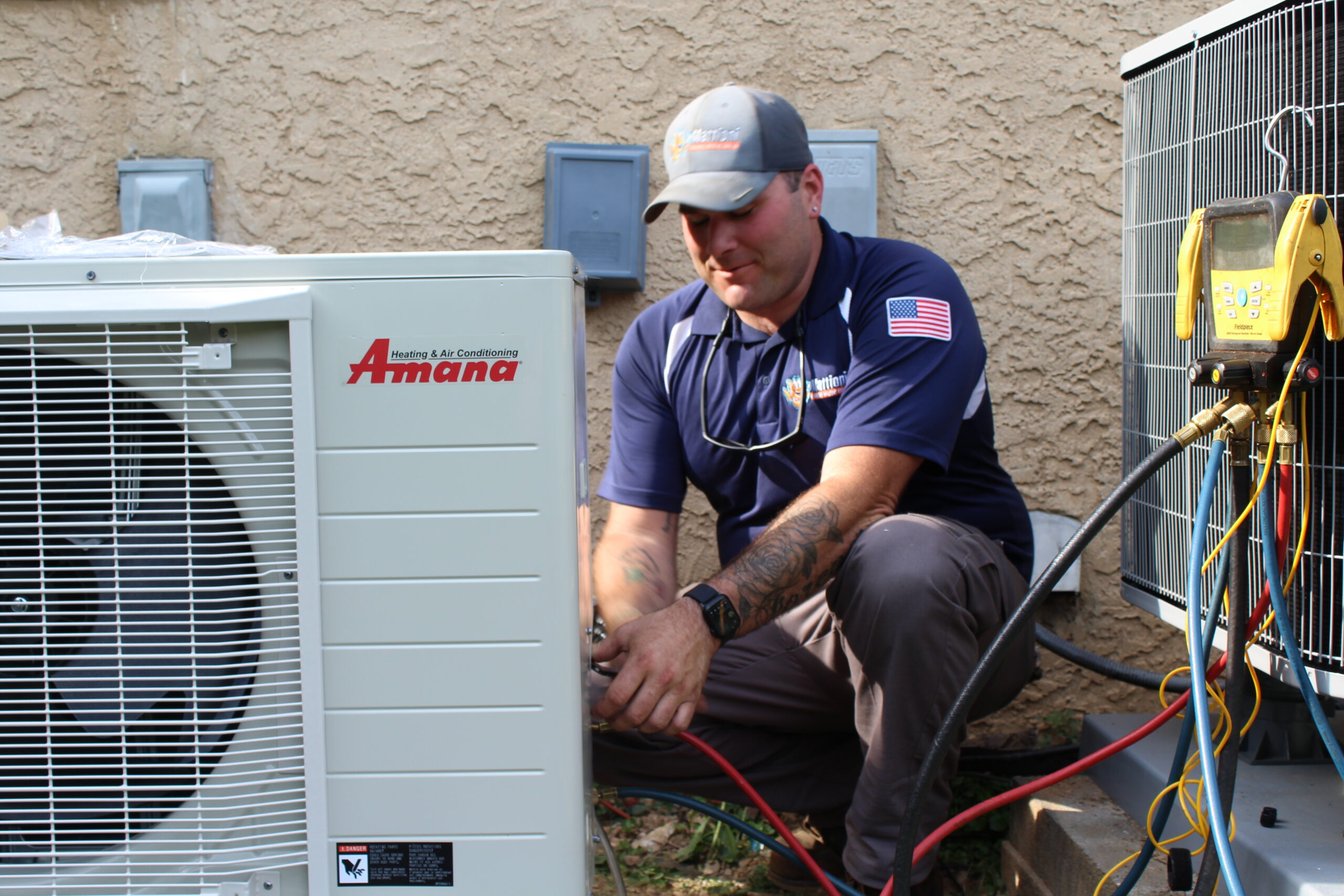
Central AC uses your existing ducts to cool the whole home from one outdoor unit. It's the quiet, out-of-sight cooling standard for most ducted houses. Ductless mini-splits skip ducts entirely, mounting sleek indoor heads for room-by-room temperature control, making them ideal for additions, finished attics, or homes without ductwork. Heat pumps work similarly to central AC (and require ductwork) but run in reverse in winter, so one heat pump system efficiently cools and heats your whole home. They're a popular upgrade across the Philadelphia suburbs. (Want a deeper primer? See our guide to your home cooling options.)
How much cooling do you need from your AC?
Cooling capacity is measured in tons, which has nothing to do with weight: one ton equals 12,000 BTUs of cooling per hour. Like an engine, you want enough power for the job, but bigger is emphatically not always better.
An oversized unit blasts your home cold, then shuts off before it can pull moisture out, leaving that cold-but-clammy feeling. It can also raise static pressure if you're replacing a smaller system and the ductwork isn't resized to match, forcing too much air through undersized ducts and straining airflow and the blower. An undersized unit runs forever and may never quite get your home completely comfortable on the hottest July afternoons. Your home's square footage is the first variable in calculating your system's size, but there are more factors in play. The slider gives you a ballpark range; our team confirms the exact size with a free in-home evaluation. And if you're looking at going the ductless mini-split route, it's all about the number of indoor air handlers (aka heads) your home calls for.
How efficient should your new AC be?
Efficiency is measured by a SEER2 rating — think of it as miles per gallon for your air conditioner. The higher the number, the less electricity it uses to deliver the same cooling, so a higher SEER2 trades a higher upfront price for lower summer bills. Today's systems start at 14 SEER2 (the current minimum) and climb past 20 for the most efficient models.
Most homeowners across the Philadelphia suburbs land somewhere in the 15 to 16 SEER2 range, the popular middle ground that delivers a real step up in efficiency without the top-shelf price. Use the builder below to slide to the SEER2 level that fits your budget and how long you plan to stay in your home. (Curious what counts as efficient? See What's Considered a Good SEER2 Rating?)
Your Comfort Profile & Blueprint
A few decisions, one plan, plus the comfort personality your choices add up to. Here's a clear, scannable starting point you can hand straight to a comfort consultant.
MATTIONI · SE PA
EST. 1948
Turn this estimate into a guaranteed plan
This blueprint is your perfect starting point. The final step is a precise, no-pressure home assessment. Here's how that works:
For 75+ years, homeowners across Chester, Delaware, and Montgomery counties have trusted Mattioni to get this decision right the first time. You've done the hard part. You understand exactly what your home needs. Now let's make it real.