

Last Revised: 2/27/2026
Picture this: a technician is standing in your living room, running through what your new AC system is going to involve. They mention the line set, you nod and keep listening. But you’re thinking, what is a line set exactly?
It’s industry language, but it’s not too complicated to understand. And understanding it can help you ask better questions, feel more confident in the recommendations you receive, and make smarter decisions about your home investments.
At Mattioni, we’ve been doing this for a long time. Since 1948 we’ve been helping homeowners understand their home’s heating and cooling systems. This article will help you understand what a refrigerant line set is, when it matters, and what you need to know.
What Exactly Is a Refrigerant Line Set?
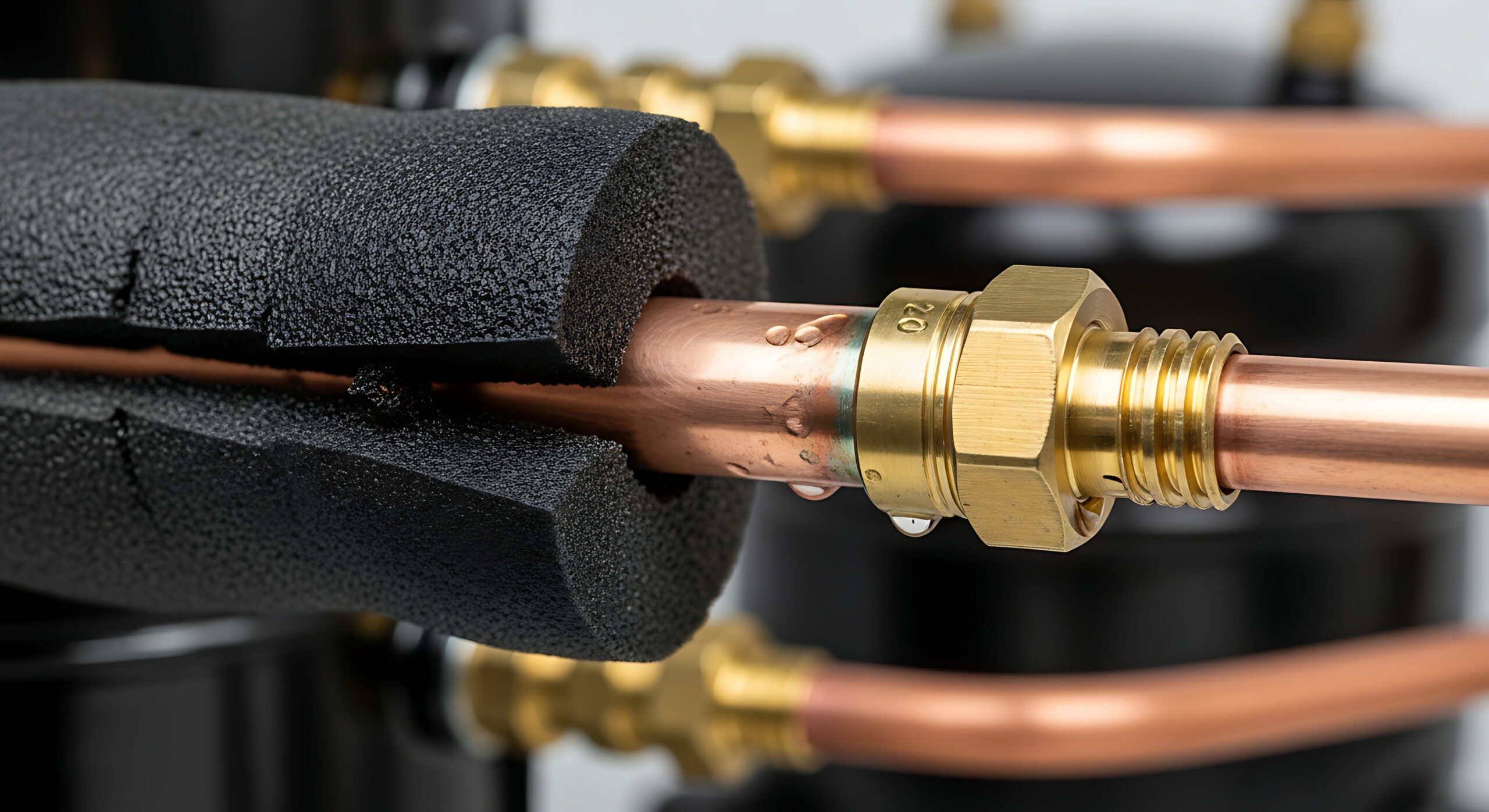
A refrigerant line set is a pair of copper tubes that connect your outdoor AC unit (the condenser) to your indoor unit (the air handler and evaporator coil). Refrigerant flows continuously through these two tubes as your system runs, and that flow is what allows your home to cool down.
One tube carries refrigerant from the outdoor unit into your home, where it absorbs heat from the indoor air. The other tube carries that same refrigerant back outside, where it releases the heat and the cycle starts over.
Think of it like the circulatory system of your AC, the line set is the pathway that allows refrigerant moving between the compressor and the coils.
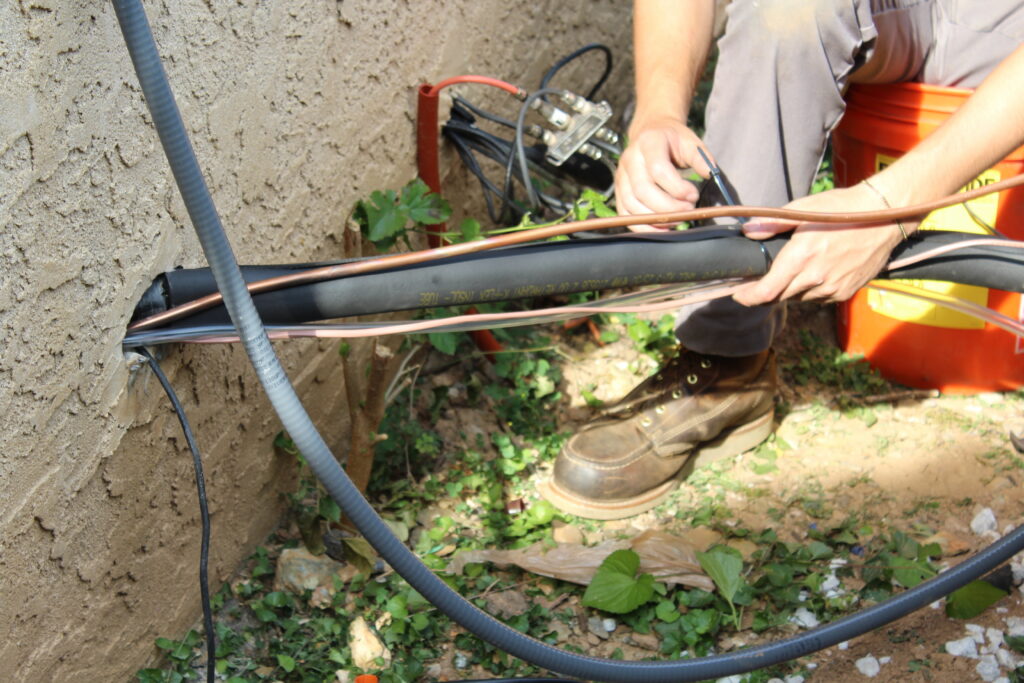
If you’ve found a pair of copper pipes running along the outside of your house (usually bundled together and wrapped in black foam insulation), that’s your line set. The insulation is there to prevent energy loss and keep condensation from forming and damaging the copper.
What Is a Refrigerant Line Set Made Of?
Copper has been the material of choice for refrigerant line sets for decades. It handles the pressure demands reliably, resists corrosion well, and is relatively easy to work with.
The line set has two separate lines, each with a different diameter:
- The suction line is larger and carries gaseous refrigerant in a cool, low-pressure state back to the outdoor compressor. This is the one covered in insulation.
- The liquid line is smaller and carries high-pressure liquid refrigerant from the outdoor unit to the indoor coil.
When Would You Need to Think About Your Line Set?
For most of your life as a homeowner, your refrigerant line set operates invisibly in the background and never needs your attention. But there are a few situations where it comes to the front of the conversation, and knowing what questions to ask when it does will serve you well.
When you’re getting a new air conditioning system installed. If you’re putting central AC into a new home or one that’s never had it, the line set is a part of the job. Your installer will size and route the lines based on where your indoor and outdoor units will be located. This is a good time to understand what’s being run where, because once it’s out of sight, it’ll likely be out of mind once the walls are closed up.
When you’re replacing an aging AC system. This is where the line set question comes up most often. You’re replacing a 12 to 15-year-old system and your contractor mentions that the line set may or may not need to be replaced along with it. The answer depends on the condition of the existing lines, whether they’re the right size for the new equipment, and (increasingly) what refrigerant the new system uses. We’ll talk about that more in the next section.
When something goes wrong. Refrigerant leaks are the most common line set-related repair issue. A leak can develop at a connection point, at a bend in the pipe, or from physical to the line. You might notice your system is struggling to cool, ice formation on the unit, or unusual noises. Any of these can point to a refrigerant issue, and a technician will need to locate and repair the leak before recharging the system.
Can You Reuse an Old Line Set With a New AC System?
This is a common question during system replacement, and it deserves a straight answer. Yes, you can usually reuse an existing line set. But it’s not always automatic, and a few key factors determine whether it makes sense or not.
Age & Physical Condition. A copper line set that’s in good shape can last 25 to 30 years. But if the insulation is cracked or missing, if the lines show signs of corrosion, if there’s evidence of leaks, or if the lines were improperly installed to begin with, reusing them introduces real risks into an otherwise new system.
Diameter & Length. The new equipment has to match the line set specs. If you’re upgrading to a higher-capacity system or a different product line, the existing lines may be the wrong diameter. Running a new, properly sized system through undersized lines will hurt performance and efficiency from day one.
Refrigerant compatibility. This is the factor that’s changed the conversation most in recent years. Older systems ran on R-22, which has been phased out of production. More recent systems use R-410A, and the newest generation of equipment is moving to A2L refrigerants like R-32.
These new refrigerants have different properties and aren’t always compatible with older systems. In some cases, the line sets must be replaced to ensure compatibility with a newer HVAC system and avoid long-term damage to the new equipment.
A trustworthy contractor will evaluate your existing line set and give you an honest recommendation based on what they find. If you’re told the line set needs to be replaced, it’s fair to ask why. A good technician will be happy to explain.
What Are A2L Refrigerants and What Do They Mean for Your Line Set?
The HVAC industry is in the middle of a pretty significant refrigerant transition. R-410A was the standard for years, the only problem is that its high global warming potential (GWP) put it in the crosshairs of environmental regulations.
Starting in 2025, the manufacturing of R-410A was halted and replaced with a new class of refrigerants called A2Ls. A2L refrigerants include R-32 and R-454B, both of which are more environmentally friendly than R-410A.
For your line set, this may or may not impact compatibility as A2L refrigerants generally require the same copper tubing that’s been used for decades. However, some older line sets may not be compatible, so it’s ultimately a case-by-case situation.
What does matter is that the equipment, refrigerant, and line set are all matched appropriately. When you’re replacing old cooling equipment, be sure to talk with your HVAC expert about which refrigerant the system uses and if your line set is set up for success.
How Long Does a Refrigerant Line Set Last?
A properly installed line set in good condition can last the lifetime of multiple AC systems, at least 25-30 years. Copper is durable, resistant to corrosion, and holds up well to the pressure demands of refrigerant systems.
That said, line sets don’t exist in a vacuum. A few things can shorten its lifespan or cause problems earlier than anticipated.
Insulation degradation is the most common wear and tear issue. Over time it becomes brittle, cracks, and starts to fall away. When that happens, the line loses its thermal protection, efficiency drops, and condensation can cause water damage.
Physical damage is another culprit, a line that gets kinked or bent too sharply at a corner, or a section that gets nicked can lead to a pinhole leak that slowly bleeds refrigerant out of the system.
Connection points and fittings are where leaks most commonly develop over time. The flared connections where the line set meets the equipment experience vibration and thermal expansion and contraction every time the system cycles. A poorly installed line set can develop slow leaks that are hard to notice until the system’s performance noticeably degrades.
A routine maintenance visit is the perfect time for a technician to inspect your line set to catch any issues before they become major problems. Addressing a minor issue is always more cost-effective than waiting for it to become a system-level problem.
Be Confident in Your Refrigerant Line Set
Now you know what your line set is made of, how it works, when to think about it, and how refrigerant regulations could impact your home. You’re prepared to have an informed conversation with your HVAC expert.
At Mattioni, we’ve been having these conversations with homeowners since 1948. Our job isn’t just to fix and install equipment, it’s to make sure you understand what’s happening in your home so that you can make decisions you feel good about.
To set up an HVAC inspection and tune-up call our friendly staff at (610) 400-8510 or book your appointment online. If your line set is in good shape, we’ll tell you that. And if there’s a reason to replace it, we’ll show you exactly what we found and explain why it matters.
Ready to take the next step? Get in touch today and set your HVAC equipment up for efficient performance for years to come.