

Last Revised: 12/18/25
You’re standing in your basement, staring at your water heater, and someone just told you that you need to replace something called an “anode rod.” And now you’re wondering: what on earth is an anode rod, and why should you care?
The expert plumbers at Mattioni have been guiding homeowners through water heater questions and concerns for over 75 years. We’re here to eliminate confusion from the equation and make your homeownership decisions as straightforward as possible.
And here’s the simple answer: an anode rod is a long metal rod that sits inside your water heater and sacrifices itself to keep your tank from rusting out. Think of it as a bodyguard for your water heater – it takes all the corrosive hits so your tank doesn’t have to.
Let’s break down everything you need to know about this unsung hero of your home’s plumbing system.
How Does an Anode Rod Work?
Steel tank water heaters will rust over time; that’s just basic chemistry. Without protection, your tank would corrode from the inside out and eventually spring a leak, flooding your basement and leaving you with a very expensive replacement bill.
That’s where the anode rod comes in. It’s typically made of magnesium, aluminum, or a zinc-aluminum alloy. These metals are more reactive than steel, which means they corrode first, before your tank. If your anode rod is in good shape, it’ll attract all the corrosive elements in your water, protecting your tank.
It’s called a “sacrificial anode” because it literally sacrifices itself for the greater good of your water heater’s health. Over time, the rod deteriorates – which is exactly what it’s supposed to do. When it’s gone, though, your tank becomes vulnerable.
What Does an Anode Rod Look Like?
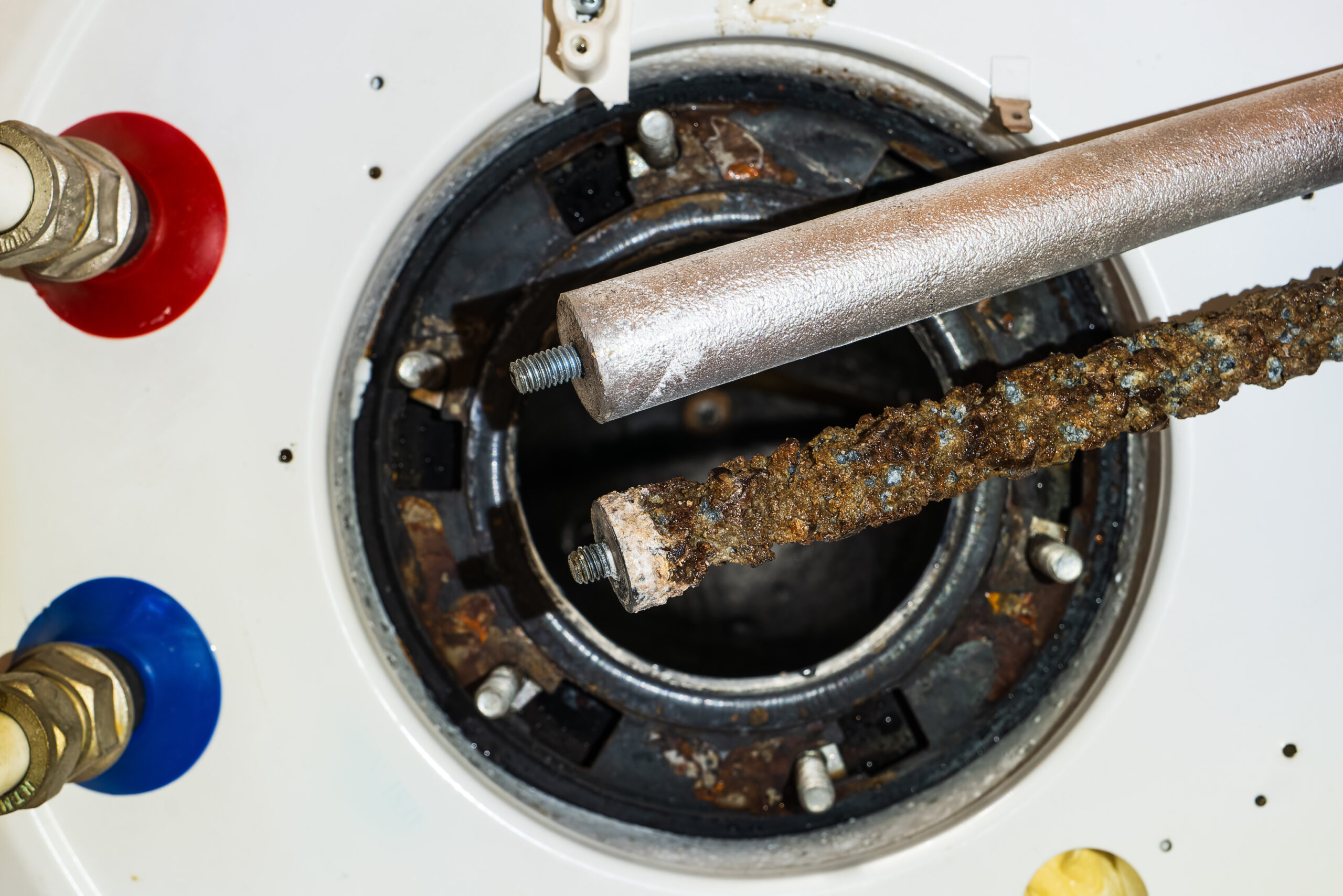
If you’ve never seen one, an anode rod looks like a long metal stick, usually about three to five feet long and roughly half an inch in diameter. At the top, there’s a hex head that allows plumbers to unscrew it from the water heater.
When it’s new, the rod is smooth and solid. After years of protecting your water heater, it can look pretty rough – pitted, corroded, or even reduced to a thin wire with chunks of calcium buildup hanging off it. That’s a sign it’s done its job and needs replacing.
How Long Does an Anode Rod Last?
Your home’s water quality directly impacts how long your water heater’s anode rod will last. In areas that deal with varying water quality across different neighborhoods, anode rods typically last between three to five years. But that’s not a strict rule.
If your water supply has aggressive water chemistry (hard water or water that tends to corrode metals faster), you could have to replace your anode rod every two to three years. On the flip side, if you have a water softener and lower mineral content, your anode rod might last longer.
The only way to know for sure is to have it inspected. That’s something the team at Mattioni has been doing for over 75 years – we’ve seen every type of water condition and anode rod situation you can imagine.
What Happens if You Don’t Replace Your Anode Rod?
When your anode rod is completely deteriorated, and you don’t replace it, steel tank water heaters start corroding. You might not notice anything at first, but eventually you’ll see signs like:
- Rusty or discolored water coming from your hot water taps. This happens when the tank starts rusting from the inside. At this point, you’re not just looking at anode rod replacement – you’re likely looking at a new water heater.
- Strange smells from your hot water. Sometimes when the anode rod is gone, bacteria can grow in the tank, creating a rotten egg smell. This symptom will depend on your anode rod and water conditions.
- Leaking around the base of the water heater. Once the tank rusts through, water starts escaping. By this time, it’s too late for an anode rod replacement. You need a new water heater, and you need it fast before you have a basement flood on your hands.
How Do I Shut Off My Main Water Line?
The thing is, replacing an anode rod is relatively inexpensive and straightforward. Replacing an entire water heater is not. It’s one of those situations where a little preventative maintenance can save you thousands.
How Do You Know When to Replace Your Anode Rod?
Most homeowners have no idea what condition their anode rod is in because, honestly, it’s not something you think about every day (if at all). But there are some savvy homeownership strategies to stay ahead of the game.
The best approach is to have your anode rod inspected every year, especially once your water heater is over five years old. A qualified plumber can pull it out, assess its condition, and let you know if it needs replacing now or if it still has some life left.
You can also watch for warning signs like discolored water, reduced hot water supply, or strange noises coming from your water heater. These don’t always mean it’s the anode rod, but they’re worth investigating.
Some water heater manufacturers recommend checking the anode rod at specific intervals listed in your owner’s manual. If you don’t have that manual anymore, don’t worry – a professional plumber can advise you based on your specific water heater model and local water conditions.
Can You Replace an Anode Rod Yourself?
Technically, yes, if you’re handy and comfortable working with plumbing. But there are some challenges that make this a risky job that many homeowners prefer to leave to professionals.
First, anode rods can be stubborn. They’re screwed in tight, and after years of sitting in hot water, they can be nearly impossible to remove without the right tools and techniques. You need a breaker bar or impact wrench, and even then, you might be wrestling with it.
Second, if your water heater is installed in a tight space – like under low basement joists – you might not have enough clearance above the tank to pull the rod straight out. Some plumbers use flexible or segmented anode rods for these situations.
Third, you need to know what type of replacement rod to install. Magnesium rods work well for most situations, but if you have soft water or a water softener, an aluminum-zinc rod might be a better choice to prevent that rotten egg smell.
It makes sense to have this professionally done during a regular water heater maintenance visit. Mattioni’s technicians have the tools, experience, and know-how to get it done right the first time – and we can spot other potential issues while we’re there.
Are All Anode Rods the Same?
Not quite. While they all serve the same purpose, there are different types of anode rods suited for different situations.
Magnesium anode rods are the most common. They work great for most water conditions and are the standard choice for many water heater installations.
Aluminum anode rods are better for areas with soft water or when you have a water softener. They’re less likely to cause that sulfur smell that can develop in some water heaters.
Zinc-aluminum combination rods are often used to prevent or eliminate the rotten egg smell caused by sulfur bacteria in your water heater.
The right choice depends on your water chemistry, your water heater setup, and any issues you’ve experienced with odors or water quality. A trusted plumber can help you choose the best option for your situation.
Anode Rod Replacement: A Small Investment for Big Protection
Your anode rod is an insurance policy for your water heater. It’s a small, inexpensive component that can add years to your water heater’s life and save you from the headache and expense of an unexpected failure.
If you’re not sure when your anode rod was last checked or replaced – or if you’ve never had it looked at – now’s the time to be proactive. Getting ahead of this simple maintenance item means you won’t be dealing with rusty water, surprise leaks, or emergency water heater replacement.
Your home’s plumbing system works hard for you every day. Taking care of it with regular maintenance isn’t just about avoiding problems – it’s about having peace of mind knowing everything is working as it should.
Ready to Have Your Anode Rod Checked Out?
Don’t wait for an emergency to think about your water heater’s health. Mattioni has been keeping homes comfortable and running smoothly since 1946, earning a 5-star reputation by treating every home like our own.
Schedule a water heater inspection today and let our experienced technicians check your anode rod and overall water heater condition. We’ll give you straight answers about what you need – and what you don’t – so you can make the best decision for your home and budget.
Call us at (610) 400-8510. With over 75 years of trusted service, we’re here to help you avoid surprises and keep your home running smoothly.