

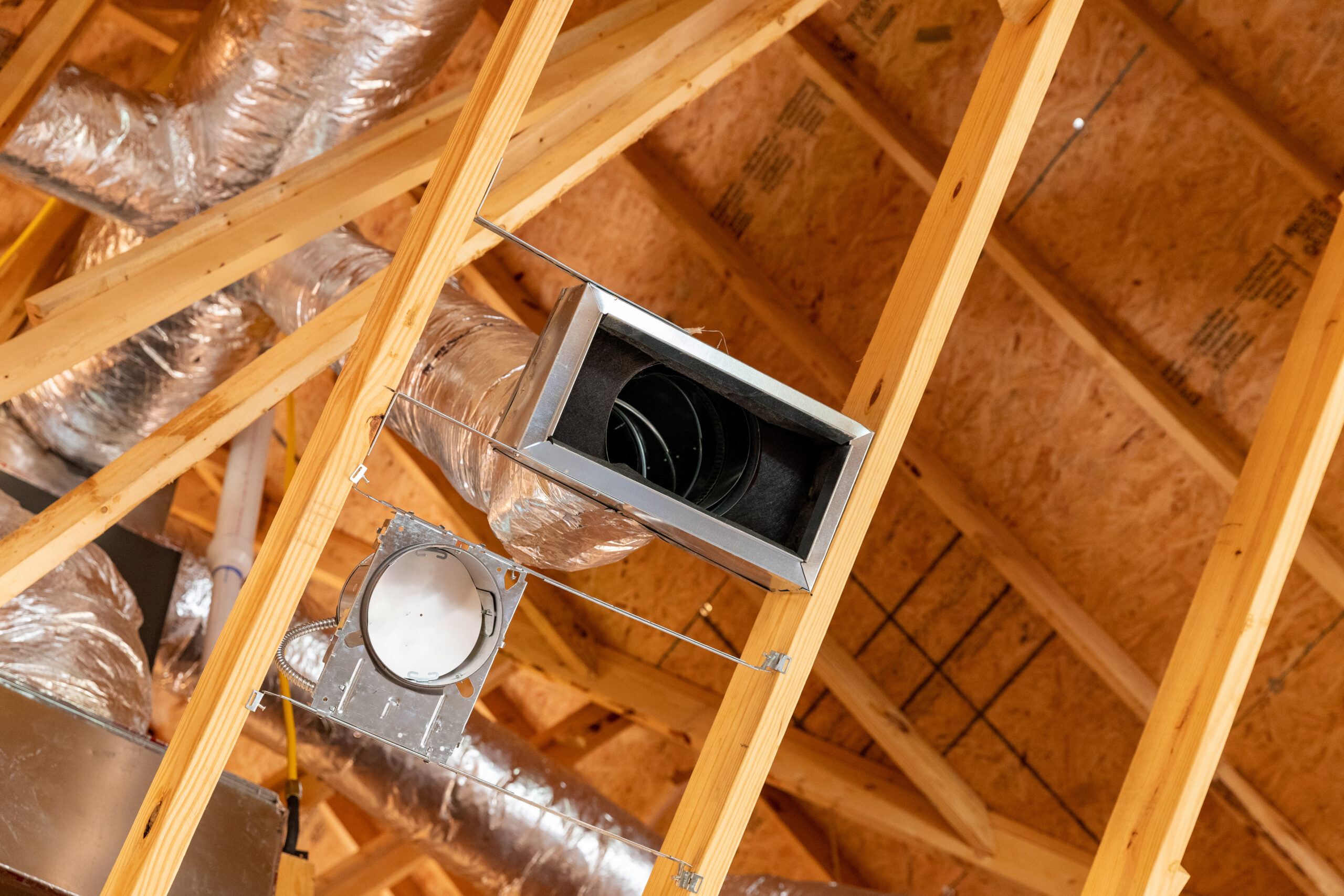
Quick answers: Static pressure in ductwork
What is static pressure in ductwork?
Static pressure is the resistance your HVAC system's blower fan has to push against to move air through your ductwork, filter, and coil. Too much resistance (high static pressure) or too little (low static pressure) both cause problems.
What's a normal static pressure reading?
Most residential systems are designed to run around 0.5 inches of water column (in. wc), with a healthy range of roughly 0.3 to 0.8 in. wc. Readings above 0.9 in. wc typically signal an airflow restriction.
Is high static pressure bad for my HVAC system?
Yes. High static pressure forces your blower motor to work harder, which raises energy bills, creates hot and cold spots, and shortens the life of your motor, coil, and compressor.
Can closed vents cause static pressure problems?
Yes. Closing supply vents to "save energy" is one of the most common causes of high static pressure. It doesn't reduce airflow, it just backs air up in the ductwork with nowhere to go.
Last Revised: 7/16/26
You know the routine all too well: Your AC kicks on, it sounds like a plane taking off, and somehow that one back bedroom is still a sauna. Meanwhile, your energy bill comes, and it’s so high you could swear it looks like a typo.
Then, after all that, when you bring it up to a professional to ask what’s going on, the answer you get is vague: “It’s probably your ducts.”
If this all sounds familiar, your system could be suffering from high static pressure, the HVAC equivalent of high blood pressure. It’s one of the single biggest comfort killers, mostly because it’s entirely invisible and its symptoms can be hard to pin down.
That’s why we put together this guide, to give you everything you need to know about static pressure. We’ve been serving homeowners for over 75 years, so we know that it can be one of the trickiest issues to diagnose within your HVAC system.
Let’s look at what’s really going on inside your ducts and how to fix it.
- Signs You Have High Static Pressure
- What Causes High Static Pressure?
- Can Static Pressure Be Too Low?
- What’s the Best Static Pressure Level?
- How to Measure Static Pressure
- How to Fix Static Pressure Issues
How Static Pressure Works
Within your HVAC system, your blower motor has the vital job of pushing air (heated or cooled) out through a network of supply ducts, past a filter, across a coil, and back through the return ducts. It lives in your furnace or a separate air handler, and, to oversimplify it, it’s the lungs of your HVAC system.
Total external static pressure (TESP) is the total resistance the blower has to overcome to keep that air moving.
Imagine you’re putting your thumb over the end of a running garden hose. As you increase resistance on the hose, the water speeds up and comes out faster. The same effect happens if any part of your duct system is undersized and constricts air. That’s static pressure in HVAC. An undersized return, clogged filter, or kinked flex duct are all common sources of static pressure.
Some resistance is normal and expected. The problem starts when there’s too much of it (or, less commonly, too little).
Signs You Have High Static Pressure in Your Ductwork
Most homeowners notice the symptoms years before they figure out the cause. If you recognize any of the following experiences, high static pressure in your ductwork may be the culprit.
- A loud “whoosh” noise when the system turns on, especially at the vents closest to the air handler.
- Hot and cold spots: rooms farther from the unit never quite catch up, no matter how long the system runs.
- Weak airflow at one or more registers, even though the system sounds like it’s working hard.
- Longer run times and higher energy bills as the blower fights harder to move the same amount of air.
- A frozen evaporator coil in the summer, because not enough air is moving across it to keep it from icing over.
- More frequent repairs: blower motors and compressors wear out faster when they’re constantly straining.
None of these symptoms are exclusive to static pressure on their own. But if you’re noticing two or three of them together, it’s worth having a technician out for an inspection.
What Causes High Static Pressure in Ductwork?
High static pressure almost always comes down to something restricting airflow somewhere in the system. Here are the most common culprits, in roughly the order we see them:
A dirty or overly restrictive air filter
This is the single most common cause, and it’s also the easiest to fix. A clogged filter (whether it’s a 1-inch pleated or highly MERV-rated) that’s too restrictive for your blower could choke off airflow before it even reaches the return duct.
Closed or blocked supply vents
This one catches a lot of homeowners off guard. Many people believe that closing vents in unused rooms should save money, but doing so doesn’t reduce how much air your blower is trying to move. It just traps air with fewer places to go. This drives up static pressure throughout the whole system.
Make sure all of your vents are open and clear of furniture, rugs, and curtains to ensure free airflow throughout your entire network of ducts.
Undersized or blocked return air ducts
Return ducts pull air back into the system to be reconditioned. If they’re too small for the equipment (which is extremely common when a furnace or AC gets upgraded but the original ductwork is unchanged), the blower has to strain to draw in enough air. This is one of the most frequent design issues we find during ductwork inspections in older homes.
Oversized or mismatched equipment
A furnace or air handler that’s too powerful for the ductwork it’s connected to will push more air than the ducts are sized to handle. This is a sizing problem, not a maintenance problem, and it usually traces back to an improper installation that skipped a proper load calculation.
Poor duct design or installation
Sharp bends, kinks in flexible ducts, and too many fittings all add friction. A duct system with a lot of twists and turns will run at higher static pressure than one with long, direct runs, even if every other component is identical.
Unmaintained, Dirty coils
Dust buildup on the evaporator coil restricts airflow the same way a dirty filter does, just further downstream in the system.
Can Static Pressure Be Too Low?
Yes, though it’s far less common than high static pressure. Low static pressure means that air is moving too freely, which sounds harmless but actually can impact your comfort. It’s typically caused by:
- Oversized ductwork relative to the equipment, so air spreads out and loses velocity before it reaches rooms further from the blower.
- Duct leaks at joints, seams, or connections, where conditioned air escapes into an attic or crawl space instead of your living space.
- A missing or improperly seated filter, which removes resistance the system was designed around.
- The fan speed is set too low for the ductwork it’s serving.
Low static pressure often shows up as weak, barely-there airflow at the vents and rooms that never quite get comfortable, even though the system doesn’t sound like it’s straining.
What’s a Normal Static Pressure Reading?
Because HVAC airflow uses very low pressure, we don’t measure it in PSI (like car tires). Instead, we use a micro-measurement called inches of water column (in. wc).
Here’s how to read those numbers:
- The Perfect Target (0.5 in. wc): Most home systems are engineered to run right around this sweet spot.
- The Healthy Range (0.3 to 0.8 in. wc): Your system is running comfortably and efficiently.
- The Danger Zone (0.9 in. wc and above): The system is “suffocating.” This usually means there is a restriction, like a heavily clogged air filter, squashed ductwork, or closed vents.
Pro Tip: There is no single “perfect” number for every home. Every heating and cooling unit has a nameplate label on it. A technician will check this label to find the exact target pressure your specific equipment was built to handle.
| Reading (in. wc) | Status | What's Happening | Typical Next Step |
|---|---|---|---|
| Below 0.3 | Low | Air moving too freely. Often oversized ducts, leaks, or a missing filter | Check for duct leaks and confirm filter is installed |
| 0.3 – 0.8 | Healthy range | System operating within normal design tolerance | No action needed. Maintain regular filter changes |
| 0.8 – 0.9 | Elevated | Approaching the upper limit of most equipment ratings | Check filter and vents; monitor for worsening symptoms |
| Above 0.9 | High | Meaningful airflow restriction somewhere in the system | Schedule a professional static pressure test |
Ranges are general guidelines for residential systems. Your exact target depends on your equipment's rated static pressure.
How to Measure Static Pressure
Total external static pressure (TESP) isn’t something you can accurately check yourself, it requires drilling small test ports into your ductwork and a calibrated tool called a manometer. Here’s what that process looks like when a Mattioni technician measures it:
1. Drill test ports
Small holes are drilled into the supply duct (downstream of the coil) and the return duct (upstream of the air handler).
2. Insert manometer probes
A digital manometer measures pressure at each point in inches of water column (in. wc).
3. Record supply and return readings
The supply side reads positive pressure, and the return side reads negative pressure.
4. Calculate total external static pressure
Adding the magnitudes of the supply and return readings together gives the TESP: the number that gets compared against your equipment’s rated maximum.
5. Compare against manufacturer specs
The reading is checked against your specific furnace or air handler’s blower performance chart to confirm whether it’s within range.
This is standard practice and should take place during any routine maintenance appointment, especially if you’ve noticed any of the symptoms mentioned above.
How to Fix Static Pressure Problems in Your Ductwork
The right fix depends entirely on the cause of the issue, and it’s worth being upfront about the price range, since it genuinely runs from “nearly free” to “a real project.”
- Change the filter. If a clogged or overly restrictive filter is the culprit, this is a same-day fix that costs the price of a filter.
- Open blocked vents. Free, immediate, and surprisingly effective: closing vents to save money almost always backfires.
- Clean coils and clear duct obstructions. Part of routine maintenance, and often enough to bring pressure back into range.
- Modify a section of ductwork. Replacing an undersized return or straightening a kinked run is often a targeted, moderate-cost repair.
- Redesign or resize the duct system. When the ductwork was never sized correctly for your equipment in the first place, a proper duct redesign is the long-term fix. It’s the biggest investment on this list, but it’s also the one that actually resolves the root cause instead of managing symptoms.
Because Mattioni works from a flat-rate pricing book, you’ll know the exact cost before any work begins. There’s no guessing or surprises once the job is underway.
| Cause | Pressure Effect | Typical Fix | Approx. Cost Range |
|---|---|---|---|
| Dirty or restrictive air filter | High | Replace filter | Cost of a filter |
| Closed or blocked supply vents | High | Reopen vents; clear furniture/rugs | Free |
| Dirty evaporator coil | High | Professional coil cleaning | Part of routine maintenance |
| Undersized return duct / kinked flex duct | High | Modify or replace the duct section | Often a few hundred dollars |
| Ductwork never sized correctly for equipment | High | Manual D duct redesign | Largest investment on this list |
| Duct leaks at joints/seams | Low | Seal and re-test ductwork | Varies by extent of leaks |
| Oversized ductwork for equipment | Low | Taper or resize affected duct runs | Varies by scope |
Costs are general ranges for context. Mattioni provides an exact flat-rate quote before any work begins.
Why This Matters More in Older Southeastern Pennsylvania Homes
A lot of homes across Chester, Delaware and Montgomery Counties have ductwork that’s decades older than the equipment currently running through it. It’s extremely common for a homeowner to upgrade to a new, more efficient furnace or heat pump without ever touching the original ductwork.
When they do, the more modern, powerful blower is now pushing air through a duct system that was sized for a much older, weaker system. That mismatch is one of the single biggest drivers of high static pressure we see in this region, and it’s completely invisible until the symptoms start.
If you’ve upgraded your HVAC system without a ductwork evaluation, and are experiencing airflow problems or inconsistent comfort, it’s worth having a professional inspect your ductwork and measure static pressure.
Get Your Ductwork Checked the Right Way
Here’s the honest three-step version of what fixing this actually looks like:
1. Identify the problem. If you’re noticing noise, uneven temperatures, or rising bills, then static pressure could be the cause.
2. Call Mattioni. A technician will measure your system’s actual static pressure to compare against your system’s specs.
3. Fix it right, at a price you agreed to upfront. Whether that’s a filter swap or a full duct redesign, you’ll know the cost (and the reasons behind the cost) before we start.
You shouldn’t have to live with a system that’s straining, a bedroom that’s always five degrees off, or bills that keep climbing without explanation. With 75+ years serving Southeastern Pennsylvania homeowners, our technicians know how to track this down and fix it, not just patch the symptom.
Call us at (610) 400-8510 or schedule your appointment online to have your ductwork’s static pressure measured and get a clear, upfront plan to fix it.
Frequently Asked Questions
What is static pressure in HVAC ductwork?
Static pressure is the resistance your blower fan has to overcome to push air through your ductwork, filter, and coil. It’s measured in inches of water column (in. wc) using a manometer.
What causes high static pressure in ductwork?
The most common causes are a dirty or overly restrictive air filter, closed or blocked supply vents, undersized return ducts, oversized equipment, poorly designed ductwork with too many bends, and dirty coils.
What are the signs of high static pressure?
Loud “whooshing” noise at the vents, hot and cold spots, weak airflow, longer system run times, higher energy bills, and a frozen coil in summer are the most common signs.
Can static pressure be too low?
Yes. Low static pressure is usually caused by oversized ductwork, duct leaks, a missing filter, or fan speed set too low, and it shows up as weak, thin airflow at the vents.