
Quick answers: Aqua PFAS treatment in Chester County
Is Aqua adding PFAS treatment to my water?
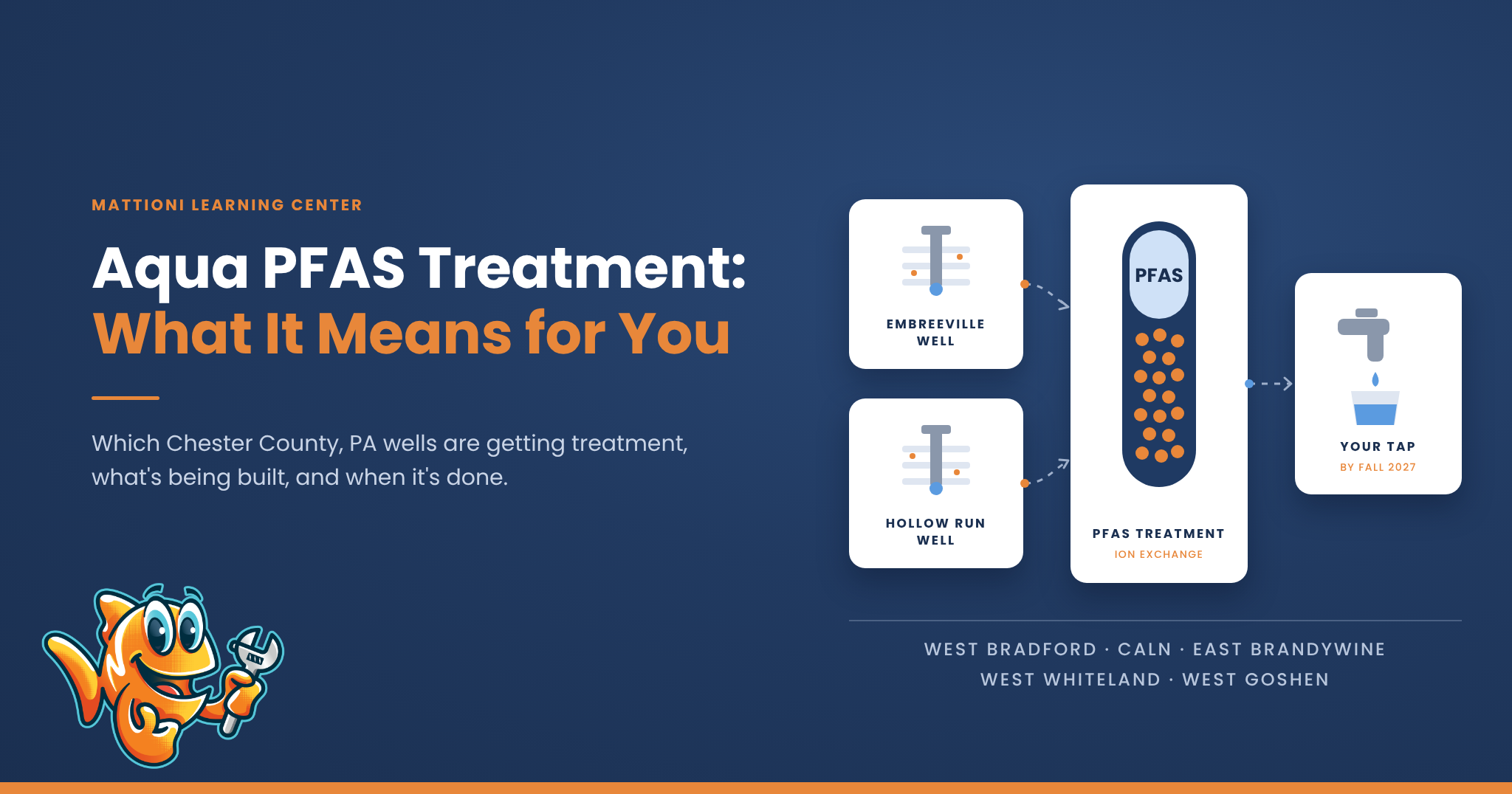
If you're an Aqua Pennsylvania customer served by the Embreeville well (West Bradford, Caln and East Brandywine townships) or the Hollow Run well (West Whiteland and West Goshen townships), yes. State funding was approved on July 15, 2026, and both projects are expected to be finished by fall 2027.
Is my water safe to drink right now?
Aqua says its water fully meets Pennsylvania's PFAS limits of 14 parts per trillion (ppt) for PFOA and 18 ppt for PFOS. The new treatment is meant to meet the stricter federal limit of 4 ppt for each.
How does fall 2027 compare to the federal deadline?
It's ahead of it. Water systems must meet the federal PFOA and PFOS limits by April 26, 2029. The EPA has proposed letting systems apply for an extension to April 2031, but that rule isn't final.
What can I do before the treatment is online?
Your Water Quality Report may not list PFAS results yet, so ask Aqua or get an accredited lab test. To lower PFAS at the tap sooner, an under-sink reverse osmosis system certified to NSF/ANSI 58 for PFOA and PFOS is the most effective option.
Key Contributor: John Meiklejohn, Mattioni Water Conditioning Specialist
Last Revised: 11/16/26
If you live in West Bradford, Caln, East Brandywine, West Whiteland, or West Goshen and get your water from Aqua Pennsylvania, you may have seen headlines about state funding for “forever chemical” treatment. You may also be wondering what it actually means for the glass of water on your kitchen counter.
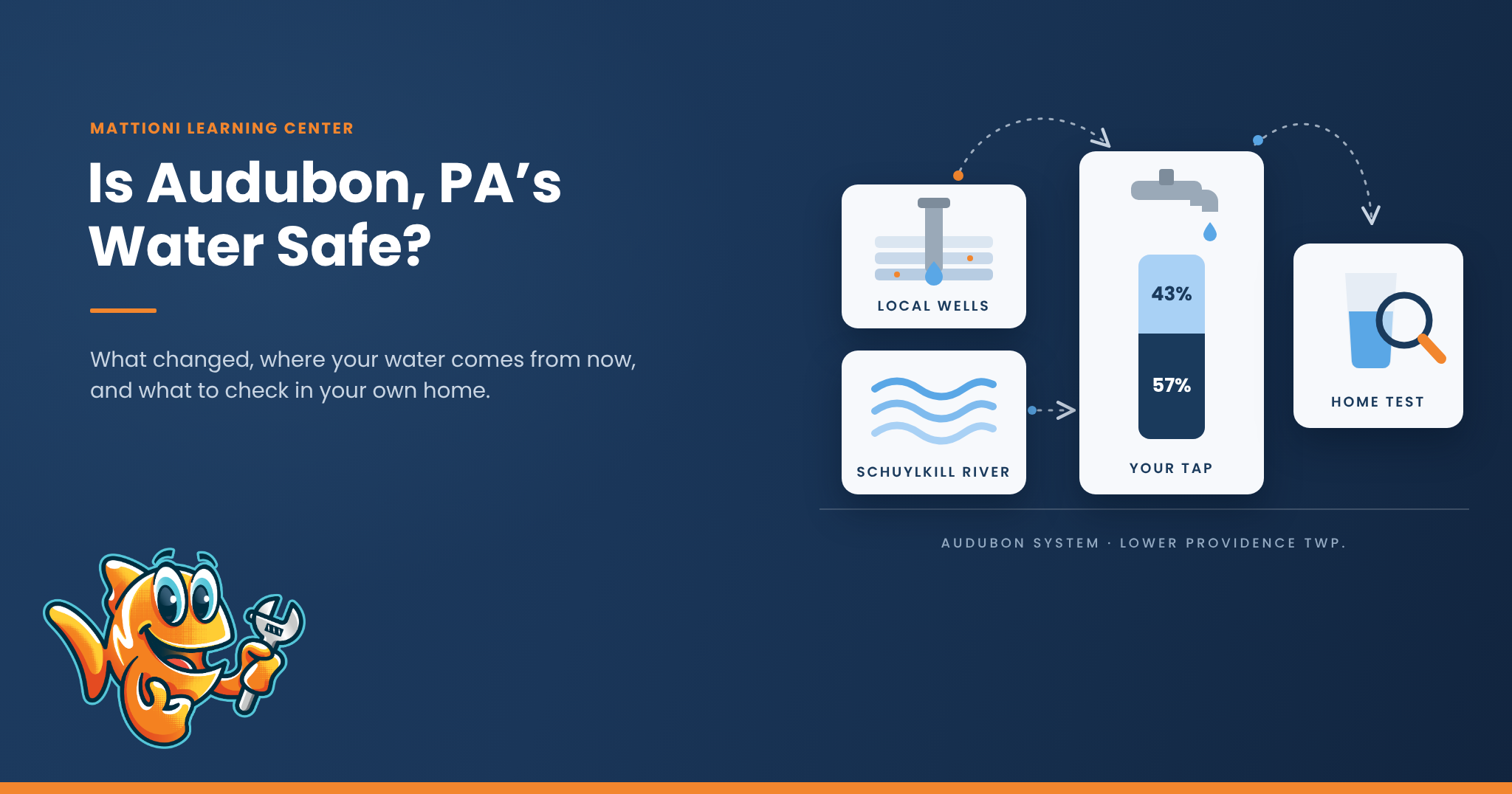
For most people in these areas, you get your water from one of two wells: the Embreeville well or the Hollow Run well. And the short version of the story is a mix of good and bad news.
Your water already meets Pennsylvania’s PFAS standard. But that’s a more lenient standard than the federal one. Therefore, Aqua is now building new treatment infrastructure so these wells will also meet the stricter federal standard, and it’s scheduled to finish in the fall of 2027. That raises one serious question: what does that mean for families between now and then?
This guide explains what’s being built, who it affects, and the choices you have in the meantime, so you can decide what’s right for your household.
What’s Ahead
Which Aqua Well Serves Your Area?
Aqua serves these five townships from several wells. Four of them have PFAS treatment projects underway or planned:
| If you're in… | Your water may come from | Treatment expected |
|---|---|---|
| West Bradford, Caln or East Brandywine | Embreeville well | Fall 2027 |
| West Whiteland or West Goshen | Hollow Run well | Fall 2027 |
| Parts of East Brandywine (Friendship system, Culbertson Run development) | Culbertson Run & Cross Keys wells | End of 2027 |
| Parts of West Whiteland | Highland Glen well | Fall 2026 (expected) |
Not sure which well is yours? West Whiteland and Easy Brandywine are each served by more than one well, so your township alone doesn’t tell you for sure. Your Aqua Water Quality Report names your water system, or you can call Aqua customer service with your address.
On a private well? None of these projects treat your water. In parts of West Bradford and Newlin townships, PFAS from the former Strasburg Landfill has reached private wells, and some households there are being offered filtration and a connection to public water. If you’re on a private well in one of these areas, start with a water quality test that looks specifically for PFAS. Our PFAS guide explains how to test well water for PFAS.
Related Reading
What’s Happening at Each Well?
The Embreeville, Hollow Run, and Culbertson Run projects all use the same basic technology: ion exchange (specifically anion exchange). The water supply passes through tanks of resin beads that chemically attach to PFAS molecules, effectively filtering them out. There’s a pre-filter too, which catches sediment first so the beads last longer, and Aqua replaces the resin when it’s used up. The treatment happens at the well, before water reaches your street.
PFAS treatment project
Due fall 2027Embreeville well
What's happening
Aqua is building a new treatment building at its Embreeville storage tank site to treat water from its wells there before it goes out to homes.
Also included
A new on-site disinfectant system, a new corrosion-control feed, a backup generator and upgraded well pump controls.
Funding
About $7.2 million from PENNVEST, the state's water infrastructure fund: a $6,616,516 loan plus $583,484 that doesn't have to be repaid.
PFAS treatment project
Due fall 2027Hollow Run well
What's happening
Aqua is adding two outdoor PFAS treatment tanks at the well, heated so they don't freeze, plus a new well pump and electrical upgrades.
Who it serves
About 975 households, according to State Rep. Kristine Howard.
Timing
Construction was scheduled to begin in October 2026.
Funding
About $1.57 million, almost all of it a grant ($1,477,697), plus a $90,303 loan.
Separate PFAS project
Due end of 2027Culbertson Run & Cross Keys wells
What's happening
Aqua is building a treatment building at the Culbertson Run well and a pipeline of about 3,050 feet to bring Cross Keys water there for treatment. PFAS levels at these wells exceed the federal limit.
Funding
A $2.55 million state grant, approved October 21, 2026.
Earlier PFAS project
Expected fall 2026Highland Glen well
What's happening
PFAS treatment here was funded in August 2025, and Aqua expected it to be finished in fall 2026. We haven't been able to confirm whether it's in service yet.
Is There PFAS in My Water in West Whiteland, West Goshen, West Bradford, Caln, or East Brandywine?
The honest answer is that the public record doesn’t give a PFAS reading for the Embreeville or Hollow Run wells. What we do know is that Aqua reports full compliance with Pennsylvania PFAS limits, and that it’ll be receiving funding to add PFAS treatment at both wells to meet the stricter federal standard. In other words, it meets today’s standards, but not tomorrow’s.
PFAS show up in water across the region. WHYY reported in 2024 that most Aqua systems with PFAS above 4 ppt (parts per trillion) were in Chester and Montgomery counties. That’s why Aqua has been adding treatment well by well across the area. To learn what PFAS are, the current state and federal limits, and how they affect health, see our complete guide to PFAS in drinking water.
Pennsylvania vs. Federal PFAS Limits
“Meets the standard” depends on which standard. Pennsylvania set its own limits in 2023. The federal limits finalized in 2024, are much stricter.
| Chemical | Pennsylvania limit (in effect since 2023) | Federal limit |
|---|---|---|
| PFOA | 14 ppt | 4 ppt |
| PFOS | 18 ppt | 4 ppt |
| Compliance deadline | Now | April 26, 2029 (EPA has proposed an opt-in extension to April 26, 2031) |
What the deadline extension means for you
In May 2026, the EPA proposed letting water systems apply for two more years to meet the federal PFOA and PFOS limits. The extension is still under consideration, and for homeowners who get their water from these wells, it doesn’t change much. Aqua’s fall 2027 anticipated completion date is ahead of the original 2029 deadline regardless. The question is should you be doing anything now?
Should You Do Anything Before Fall 2027?
Pregnant women, nursing mothers, and families with young children have the most reason to take action today. A home filter is the only way to lower PFAS at your kitchen tap between now and fall 2027. If you’d rather not wait for safer water, here’s your action plan.
- Find out what’s in your water. Your annual Water Quality Report is a starting point, but it may not list PFAS results yet. Ask Aqua for your system’s latest PFOA and PFOS results. For a reading at your own tap, an accredited lab test that includes PFAS is the only reliable option. Test strips and quick home kits can’t detect PFAS.
- Filter your drinking and cooking water. PFAS matter most in the water you swallow, so filtering at the kitchen tap covers most of the exposure. An under-sink reverse osmosis system is the most effective option. Carbon filters also work, but are generally less effective than RO on shorter-chain PFAS. Not every certified filter carries a PFAS claim, so check the product’s listing on NSF’s website rather than the box.
- Maintain it. A filter only works while its cartridge or membrane is in good shape. Replace cartridges on schedule. An overdue filter can stop reducing PFAS without any change in taste.
Our PFAS guide compares which filters remove PFAS and what they cost. For other water concerns, such as hardness, chlorine taste or sediment, see Which Water Filter Is Right for Me? And our Water Conditioning Buyer’s Guide.
Will My Water Bill Go Up When Treatment is Set Up?
Hollow Run (West Whiteland, West Goshen): There is no increase expected. State Rep. Kristine Howard’s office says customers won’t see a rate increase because of this project. Almost all of its funding is a state grant, which Aqua doesn’t have to repay.
Embreeville (West Bradford, Caln, East Brandywine): It is not yet known. Neither Aqua nor the state has said whether this project will affect rates.
How Aqua’s rates are set: Aqua can’t raise rates on its own. Every increase goes through a public review by the Pennsylvania Public Utility Commission (PUC), and Aqua can include the cost of projects like these when it asks for one. State grants help keep that cost down.
Frequently Asked Questions: PFAS in Chester County, PA
Is there PFAS in my water in West Whiteland Township, and what should I do?
Aqua says its water meets Pennsylvania’s PFAS limits. Aqua is adding treatment at the Hollow Run well, which serves West Whiteland and West Goshen, to meet the stricter federal standard by fall 2027. Ask Aqua for your system’s PFAS results or get an accredited lab test. If you want lower levels sooner, an under-sink RO system certified to NSF/ANSI 58 for PFOA and PFOS is the most effective option.
When will Aqua finish PFAS treatment in Chester County?
The Embreeville and Hollow Run projects are expected to finish by fall 2027. The Culbertson Run and Cross Keys project in East Brandywine is expected by the end of 2027.
Is Aqua water safe to drink in Chester County?
Aqua reports full compliance with Pennsylvania’s PFAS limits (14 ppt PFOA, 18 ppt PFOS). The federal limits are stricter (4 ppt each) and take effect in April 2029. Aqua is adding treatment at these wells to meet them.
Does reverse osmosis remove PFAS?
Yes. A reverse osmosis system certified to NSF/ANSI Standard 58 for PFOA and PFOS reduction is the most effective home option. Check the specific model’s certification, and replace the filters and membrane on schedule.
Do I need a whole-house filter for PFAS?
For most Aqua customers, no. PFAS exposure comes mainly from drinking and cooking water, so a certified point-of-use filter at the kitchen tap covers most of it.
I'm on a private well in West Bradford. Does this apply to me?
No. Aqua’s projects only treat Aqua’s public water. Private well owners, including those near the former Strasburg Landfill, should test their own well water.
Your Next Step: Peace of Mind, Not Panic
You shouldn’t have to be a chemist to feel good about the water your family drinks. For more than 75 years, Mattioni has helped Chester County homeowners understand their water and choose treatment that fits. We’ll start with your actual water results, and find the water conditioning solution your home needs.
- Find your numbers. Ask Aqua for your system’s PFAS results, or let us arrange an accredited lab test at your tap.
- Talk it through. Call (610) 400-8510 to schedule a water consultation with our Downingtown team, or book your appointment online.
- Choose what fits. If a filter makes sense for your household, we’ll recommend a certified system, install it and keep it maintained. If it doesn’t, we’ll tell you.
Aqua’s treatment is coming. Until it arrives, you can drink your water knowing exactly where it stands, and make a confident choice about what’s right for your home.