

2026 Heat Pump Installation Cost · Exton, PA
Mattioni upfront pricing · Chester County
| Central Heat Pump | Typical Installed Price |
|---|---|
| Single-stage (standard efficiency) | $12,000–$20,000 |
| Two-stage (high efficiency) | $14,000–$24,000 |
| Variable-speed (premium efficiency) | $15,000–$25,000 |
Ranges reflect Mattioni's upfront pricing for the Exton and greater Chester County service area. Your exact price is set after an in-home load calculation.
Quick answers: Exton heat pump installation cost
How much does heat pump installation cost in Exton, PA?
In 2026, most Exton homeowners pay between $12,000 and $25,000 for a new central heat pump. Single-stage systems run $12,000 to $20,000, two-stage systems $14,000 to $24,000, and variable-speed systems $15,000 to $25,000 installed.
What makes one Exton heat pump quote higher than another?
The precision of the system's performance output is the single biggest factor, followed by the tonnage your home actually needs, SEER2 and HSPF2 efficiency ratings, the condition of your ductwork, installation complexity, add-on equipment, and the quality of the installing company.
Do I need an air handler with my heat pump?
Only if your home has no furnace to supply the blower. Exton homes heated by a boiler with baseboard or radiator heat almost always need an indoor air handler, which adds $5,000 to $8,000 to the project.
Is the federal heat pump tax credit still available in 2026?
No. The federal Energy Efficient Home Improvement Credit (Section 25C) applied only to property placed in service through December 31, 2025. Exton homeowners installing in 2026 should plan around PECO utility rebates and financing instead.
Does Mattioni install heat pumps in Exton?
Yes. Mattioni has served Exton, Lionville, Downingtown, and the rest of Chester County for more than 75 years, with NATE-certified technicians, free in-home consultations, upfront flat-rate pricing, and financing options.
Last Revised: 7/22/2026
If you live in Exton, you already know how our weather takes a real toll on heating and cooling equipment. In the winter, morning temps can dip into the teens when you’re making your way down Route 100, and in the summer, July afternoons turn humid and stay that way for weeks on end. Your HVAC system spends the year battling whatever weather comes its way.
So, when your furnace or air conditioner finally gives out, you may start looking at how a heat pump could efficiently handle both heating and cooling. And when you do, the first real question that usually comes up is a simple one: what is this going to cost me?
That’s an important question, and it deserves a better answer than “it depends.” On this page are our real 2026 heat pump installation price ranges for the Exton area. In this article, we’ll shed some light on a major make-or-break factor, price, with an honest breakdown of what moves your heat pump installation cost up or down and the ways you can legitimately spend less.
After 75+ years serving Chester, Delaware, Montgomery, and Berks County homeowners, we’ve found that an informed homeowner is a confident one.
How Much Does a Heat Pump Installation Cost in Exton, PA?
For a heat pump installed in the Exton area in 2026, most homeowners land between $12,000 and $25,000.
But a $13,000 range isn’t much help, so let’s focus first on the biggest factor in heat pump installation costs: the precision of the system’s performance output. Heat pumps, like other systems, fall into three classes:
- Single-stage ($12,000-$20,000): The compressor is either running at full capacity or completely off. It’s the most affordable way to make the upgrade to a heat pump and is a perfectly solid choice for a lot of Exton homes. Single-stage systems pair with virtually any furnace or air handler.
- Two-stage ($14,000-$24,000): Adds a second performance capacity (roughly 65% power) so the system can run at a slower speed, rather than blasting on 100% and shutting off. This allows for steadier temperatures, better humidity control, quieter operation, and lower operating costs. Two-stage heat pumps require a two-stage or variable-speed blower motor at the indoor unit.
- Variable-speed ($15,000-$25,000): The top tier. Its compressor scales continuously, which means the most even room-to-room temperatures, the quietest operation, and the lowest monthly bills. Variable-speed heat pumps pair only with a variable-speed indoor unit.
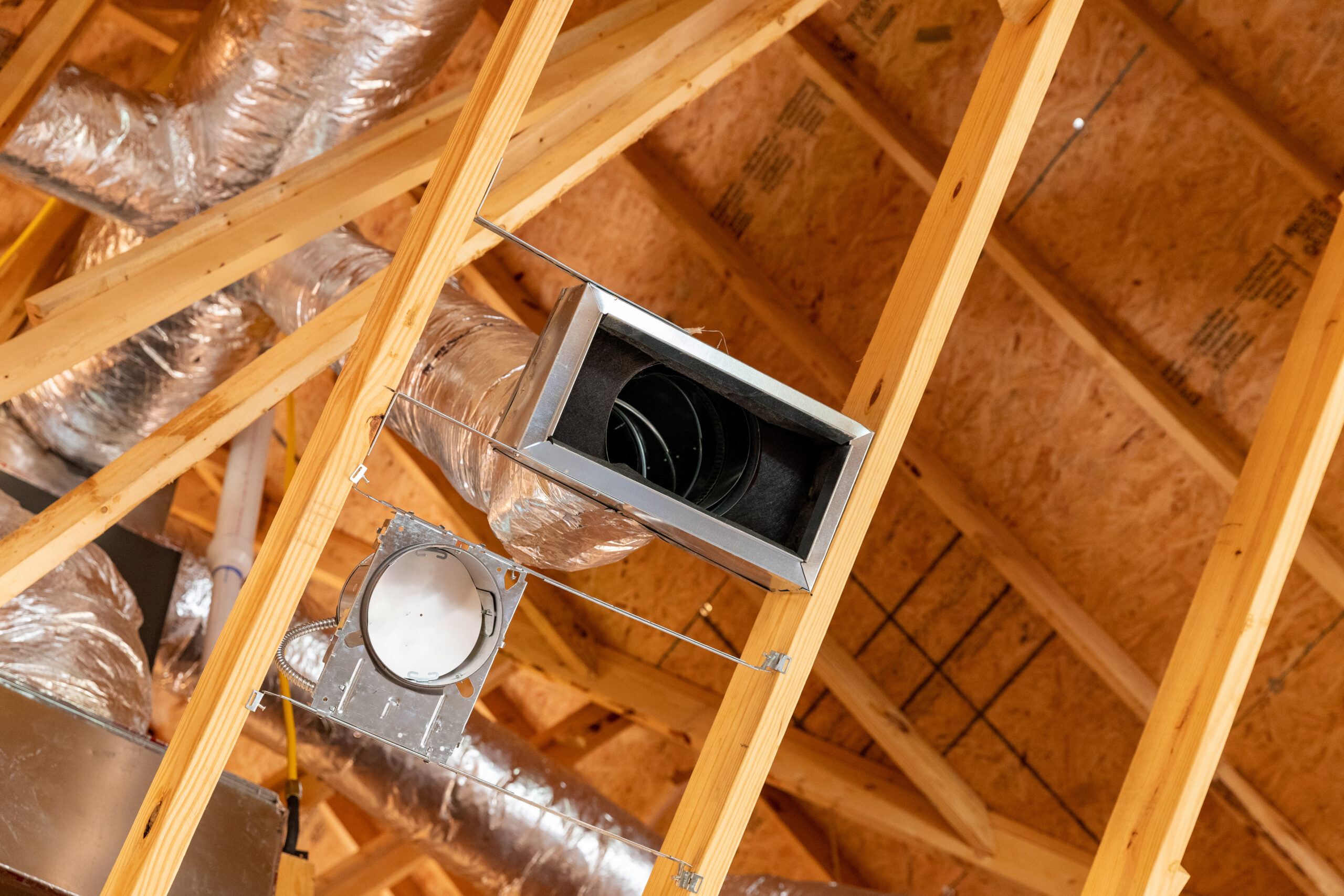
There’s one key wrinkle to notice when exploring systems, because it catches many homeowners off guard. Much like central AC units, heat pumps don’t have a built-in blower motor (which is a vital component). That’s significant because if you don’t have a furnace, your new heat pump will need its own dedicated air handler, which adds $5,000 to $8,000 to the upgrade.
For context, replacing a furnace and AC (the equivalent of a heat pump’s capabilities) runs $11,500 to $34,000 total when installed at different times. If you’re weighing options, our guide to AC and furnace replacement costs can give some much-needed clarity on where your home falls in that range. Typically, heat pump installation costs are comparable to replacing both systems at once.
Want the full picture on the technical side of heat pumps before you shop? Our Heat Pump Buyer’s Guide walks through system types, efficiency ratings, and sizing in detail.
What Factors Into the Cost of Your Exton Heat Pump Installation
Now that you have the starting ranges, let’s talk about what actually determines where your home’s price lands. We work from a flat-rate pricebook across our service area, so an Exton homeowner and a West Chester homeowner get the same number for the same job. There are, however, seven main cost factors to understand. Understanding them is the difference between getting blindsided by an estimate and walking into the consultation already knowing what to expect.
What Pushes an Exton Heat Pump Quote Up or Down
| Factor | Lowers your price | Raises your price |
|---|---|---|
| Compressor staging | Single-stage | Two-stage or variable-speed |
| Efficiency (SEER2 / HSPF2) | Standard-efficiency equipment | Premium SEER2 and HSPF2 ratings |
| Capacity (tonnage) | Smaller, tightly sealed, well-insulated home | Larger or draftier home, heavy window exposure |
| Indoor equipment | Compatible furnace already in place | Air handler required (+$5,000–$8,000) |
| Ductwork condition | Sound, correctly sized, adequate return air | Leaky, undersized, or high static pressure |
| Installation complexity | Accessible basement, short lineset run | Attic or crawl space work, electrical upgrades, wall penetrations |
| Add-on equipment | Equipment only | Humidifier, dehumidifier, air purification, smart controls |
1. System type and number of stages
We already talked about it, and it’s first on the list because it’s the largest single price factor. Moving from single-stage to two-stage to variable-speed raises your installation cost, however it’ll also pay you back over time with lower utility bills (and steadier home comfort).
If you’re working with a firm budget, single-stage is a legitimate answer. If you want the best bills and the most consistent comfort, variable-speed is worth the jump. For a lot of Exton families, two-stage systems offer the best of both worlds.
2. Energy efficiency (SEER2 and HSPF2)
Since a heat pump both heats and cools, it carries two efficiency scores. SEER2 measures cooling efficiency, and HSPF2 measures heating efficiency. As both ratings climb, so does the price of equipment. And so does the size of the monthly savings.
Higher-rated equipment also tends to be what qualifies for utility rebates, which can offset part of the price tag.
Why Fewer Start-Ups Means a Lower Bill
A heat pump burns nearly all of its energy in the moment it starts up. The system that starts least often is the one that costs least to run, and it happens to be the one that keeps your rooms steadiest.
A single-stage system overshoots your setting, shuts off, drifts, and fires up again. A variable-speed system settles in at a low output and mostly stays there. That long, quiet runtime is also what pulls humidity out of the air during a Chester County August.
3. The heating and cooling capacity your home needs
Capacity, also called the system’s size, has to be matched to your specific house, not just your square footage. Factors such as insulation rating, floor plan, number and direction of windows, etc. all impact how much heating and cooling capacity your home needs.
Capacity is measured in BTUs per hour. You will also hear it described in tons for cooling, which is just shorthand: one ton equals 12,000 BTUs per hour.But bigger isn’t better here; your system has to fit into the sweet spot for your home. An oversized unit will short-cycle, wear itself out early, and do a poor job controlling a steady temperature. And an undersized unit will run constantly and struggle to reach your thermostat’s set temperature.
This is why the knowledge and experience of your heat pump installation partner matters.
4. The condition of your ductwork
Heat pumps move air differently than a furnace does. They run longer at lower supply temperatures, which means airflow matters more than it used to.
Ductwork that was previously utilized by a furnace, may still be a good fit for a heat pump. But it might also be leaking, undersized, poorly balanced, or fighting too much static pressure. Soundly working ducts keep your project costs down. Ducts that are unsuitable for your new heat pump ought to be addressed, otherwise you won’t realize the full benefits of the upgrade.
5. Installation complexity and add-on equipment
Two homes needing identical equipment can still come in at different costs based on what it takes to physically install it. Things like attic work, tight crawl spaces, long refrigerant linesets, wall penetrations, or electrical work can all directly impact the unique price of your installation work.
Many homeowners take their heat pump installation as an opportunity to improve the whole indoor environment at once. Indoor air quality systems are far cheaper to install at the same time as new heating and cooling equipment, rather than as a separate job in the future.
Common Comfort Add-Ons · Installed Alongside a Heat Pump
| Add-on | What it solves | Typical cost |
|---|---|---|
| Smart thermostat | Staging control, scheduling, remote access | $700–$1,200 |
| Whole-house humidifier | Dry air during Chester County winters | $1,300–$3,300 |
| Whole-house dehumidifier | Sticky basements and humid July afternoons | $3,000–$4,300 |
| Air scrubber / purifier | Allergens, dust, and airborne particulates | $1,400–$1,500 |
Add-ons are optional. They raise your total investment but are far cheaper to install during an equipment replacement than as a standalone project later.
6. Your Geography
Geography shows up on your estimate in two ways, and the bigger one is the housing stock around you.
Exton covers a wide range of homes, from older properties near the village center to the newer construction that filled in along the Route 100 and Whitford corridors. That range matters because of one question: does your home already have a furnace? If it does, your heat pump borrows that blower and your indoor cost stays down. If your home is heated by a boiler feeding baseboard or radiators, there is no blower to borrow, and the $5,000 to $8,000 air handler becomes part of the project. In a neighborhood built almost entirely in the last few decades, that question rarely comes up. Around here it comes up regularly, and it’s the single largest reason two Exton quotes on similar-sized homes can land thousands apart.
The second factor is simpler. Technician wages in southeastern Pennsylvania run higher than in rural parts of the state, and that sits inside every quote you will receive in this area.
What your home’s geography doesn’t explain is your equipment cost. A three-ton variable-speed heat pump costs roughly the same whether it’s headed to Exton, Media, or Schwenksville. But the installed price is a different number: labor and scope of work are where your market and the details of your home show up.
7. The quality of your installation company
This is the factor homeowners underrate most. You may receive a quote that’s dramatically lower than others, which might feel like a golden ticket but is actually an obvious red flag. A heat pump installation includes several key steps that require experience, precision and care. Any shortcuts taken during an HVAC installation will show up as system issues, higher energy bills, and a shorter system lifespan. A high-quality installation, on the other hand, will protect and get the most out of your investment.
How to Lower Your Heat Pump Installation Cost in Exton
A new system is a real investment. Here’s what can genuinely bring the pricetag down in 2026.
Heat Pump Incentives for Exton Homeowners · 2026
| Program | Status in 2026 | What it means for you |
|---|---|---|
|
Federal 25C tax credit Energy Efficient Home Improvement Credit |
Expired | Applied only to property placed in service through December 31, 2025. Do not budget the old $2,000 credit into a 2026 project. |
| PECO heating & cooling rebates | Active | Cash-back rebates on qualifying ENERGY STAR certified heat pumps. Amounts, efficiency thresholds, and deadlines change, so confirm your specific model before purchase. |
| Promotions | Seasonal | Rotate by brand and season. Your installer should tell you what is running the week you sign. |
| Financing | Available | Spreads the investment across monthly payments so you can install the correctly sized system instead of downsizing to fit a cash budget. |
Incentive programs change. Verify current eligibility and amounts before you purchase equipment. This is general information, not tax advice.
- Capture rebates that are still live. PECO’s heating and cooling rebate program applies to a range of high-efficiency equipment. Amounts, efficiency thresholds, and submission deadlines change, so be sure to confirm eligibility for your specific model before making a purchase. Our guide to Philadelphia-area HVAC rebates and incentives tracks what’s current.
- Use financing. Spreading the cost over monthly payments lets you install the correctly sized, properly efficient system instead of downsizing the project to fit a smaller budget.
- Don’t wait for the emergency. Replacing a dead system in the middle of a January cold snap leaves you no time to compare options, no leverage, and no access to off-season pricing. Planning your replacement for the spring or fall is almost guaranteed to cost less.
Why Exton Homeowners Trust Mattioni
For more than 75 years, Mattioni has kept families comfortable across Exton, West Chester, Downingtown, and the rest of Chester County. Our certified technicians size and install every system with precision and care. We work from a flat-rate pricebook, so you know your complete cost before any work begins. But that’s not the only reason homeowners have been calling us since 1948. What keeps our customers coming back is that we treat your home as if it were ours.
Ready to schedule a free in-home consultation? We offer fast scheduling and financing options that can make the whole process feel a lot less stressful.
You’ve spent enough winters wondering whether the old system will make it to spring. Take the next step towards lasting home comfort.